Theory: Theme By Doing

One of the most thematic games I’ve ever played is also one of the simplest. Utopia Engine is a print-and-play game that uses a greyscale map, a pencil, and some dice to simulate an artificer trying to rebuild an ancient machine. The game accomplishes that by transmitting, not the mental experience of building a singular work of mechanical brilliance, but the physical experience of fiddling with knobs trying to get the darn thing to work. In doing so it reminds me that a game’s theme can be implemented, not just at an intellectual level, but also through the actions players physically take during the game.

When we think about a game’s thematic power we usually take a bird’s-eye perspective. Is the artwork compelling? Do the mechanics produce the same incentives that a similarly-situated person in the real world would encounter? Are the rules of the real world enforced in a sensible way?

By contrast, we rarely worry about the more grounded issue of what the players are physically doing. If a board game about World War II aerial dogfighting has realistic art for the planes, mechanics that encourage players to use strategies real pilots used, and limits on maneuverability appropriate to the era, it’s a thematic game. We forgive the abstraction wherein players fly by moving pieces on a map rather than using a joystick and throttle.

We shouldn’t assume, however, that the players’ physical actions must necessarily be abstract. To the contrary, getting players to do something that feels like the activity being simulated can be very powerful. It’s like food that both tastes good and smells good; just the former is great, but having both is amazing.

That’s where Utopia Engine comes in.

Utopia Engine is about putting together a half-understood device using scavenged parts and incomplete blueprints. It could have simulated the painstaking work of getting old and weathered pieces of a machine to work, and work together, in many ways: completing sets of cards, perhaps, or drawing specific chips from a cup.

Instead, the game has players roll dice and choose boxes in which to put the results, trying to set up arithmetic equations that produce desired answers. It feels exacting, unpredictable, and even math-y. It feels, in other words, just like we imagine the work of a semi-mystical artificer trying to rebuild an ancient and complex artifact would feel!

Utopia Engine has nice art and sensible mechanics, but it’s the feel that really brings the theme home. Playing the game by taking notes and doing math—the very sorts of things an artificer might do at the workbench—puts the player in the game in a very immediate way. By asking the player to do thematic things, Utopia Engine creates an unusually compelling experience.

Other games have also taken this approach to good effect. In Thebes, a game about excavating archaeological sites, players “dig” by reaching into a bag full of cardboard chits–some representing treasure, others with simple dirt–and pulling one out. Thebes’ designers could have achieved the same technical result by having players draw cards from a deck, but actually digging for the valuable pieces adds immeasurably to the atmosphere.

Board games are not the only type of game that can deploy this approach. Flight simulators, car racing games, and rhythm games all have spawned whole cottage industries devoted to providing specialized controllers that closely mirror real-world equipment. Those controllers are not necessary for good play; one could very well succeed at Rock Band or Guitar Hero using a QWERTY keyboard. Rather, they are popular because flying a video game plane using a joystick, or driving a video game car with a wheel, makes the experience more convincing and real. The special controllers allow the theme to extend beyond the TV screen and into the player’s hands.

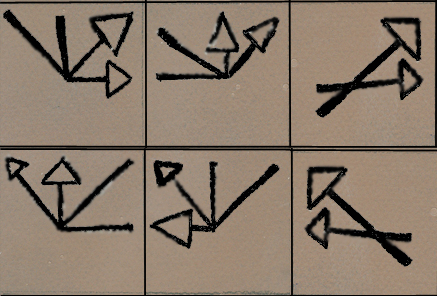
There’s nothing wrong a game whose theme works on an entirely intellectual level. My own Lines of Questioning is exactly that sort of game, one where the theme is in the thinking and player’s actions have no real-world parallels. (“Your Honor, I move to . . . play this tile!”) However, it’s worth remembering that theme can also be expressed through what the player does to interact with the game—and that bringing a game’s theme out in that way can be exceptionally powerful. Keep an eye out for opportunities, like Utopia Engine’s die-rolling-as-machine-maintenance and Thebes’ bags of dirt and treasure, to take advantage of that possibility.
Theory: How to Make Losing Fun–Give the Player Something Fun to Do

For many games the fun is in the winning, and so when a player is losing the designer needs to take special steps to prevent the entire experience from falling apart. However, there’s a whole other category of games, ones where the entertainment is found primarily in the doing. Those games point toward a different, and very powerful, way to help a losing player have fun: make the core game experience inherently enjoyable.

Rock Band is a game about singing, pretending to be a guitar shredder, and banging on drums. Although it’s very challenging, Rock Band is a great time even when the player is not doing well. Part of that is because the game has easily measurable goals short of winning: to get a little further in the current song before the crowd boos the player off the stage, to survive the crowd’s ire to the end of the song, to master the song and keep the crowd cheering all the way to the end.

Much of the reason Rock Band works, however, is because the activities it asks the player to do are fun completely independent of the rewards on offer. People just plain like singing! The crowd’s cheering, the score at the end—those are nice, but they hardly matter. Players would sing without the prospect of any reward (and in fact they do, all the time—how many people sing along with the car radio, or in the shower?). Rock Band is fun, not just because it has finely-tuned goals short of winning, but because it’s an excuse to do something that’s fun without any incentives at all.

The same goes for playing guitar (I played in college, and I assure you, no rewards were in the offing) and drums. Drumming is literally a socially acceptable way to hit things with sticks. That’s something people want to do so badly that they do it even when they’ll be punished for it, as countless broken windows resulting from baseball games played too close to the house will attest. Certainly part of the fun of drumming in Rock Band is achieving the goals the game sets out, but those goals don’t have to carry too much of the weight. The player will have fun even if she never reaches them, because drumming in Rock Band means getting to hit things! With sticks!

Jenga, a modern classic among dexterity games, provides another example of this dynamic at work. For those who have never played, the only game pieces in Jenga are blocks, which start the game on top of each other to form a tower. Players take turns removing blocks, trying not to knock over the tower as they do so. Whoever topples the tower loses.

There is only one sub-goal in Jenga, which is to get through the turn without knocking over the tower. One might reasonably wonder whether that would be sufficient to keep players who don’t see themselves winning entertained.

Yet when one plays the game one discovers that the relative paucity of intermediate goals doesn’t matter, because the things the players do are so much fun. Jenga is very tactile, involves lots of dexterity, and frequently has players laughing as they try to catch a tower that’s swaying perilously. Even the moment when a player loses can be entertaining, as it involves a great crash of blocks (loud, but not so loud as to frighten children) and stuff flying everywhere.

Compare Rock Band and Jenga to the average CRPG with a menu-based combat system and conversation trees. A CRPG like that has to do an enormous amount of work to be fun, providing many different goals short of winning, because the fundamental activity the player is engaged in is moving an arrow up and down followed by pressing a button. With winning far in the distance and an unenthralling basic mechanism, the average CRPG relies heavily on carefully placed sub-goals to keep the player engaged.

Of course, many CRPGs—yes, even menu-driven CRPGs—are great fun, just as entertaining as are Rock Band and Jenga. The key is in how these games provide their fun. We are accustomed to the sort of sub-goals that we see in CRPGs: story progression, gaining experience levels, collecting items. Rock Band and Jenga point to another way to amuse players who will not win, at least not for a long time: give them something inherently fun to do.

Lines of Questioning & Theory: Test the Boring Option

Sometimes you need to test the simple thing that will probably work, even though no one will be impressed that you thought of it. As a designer I always feel good when I come up with a unique solution to a problem. Recent playtests of Lines of Questioning have reminded me, however, that basic fixes are considered basic for a reason: they consistently do the job. Flashy solutions that bring excitement to the table are much more likely to come apart under the pressure of play. It’s therefore wiser to check the simple possibilities first, deploying unique and tricky mechanics only when their necessity outweighs the risks involved.

Last time we talked about Lines of Questioning I was looking forward to testing a new player power.

Lawyer - Unexpected Revelations One of my expectations for this power was that it would make the game substantially easier. Lines of Questioning was fun, but incredibly difficult. Providing an easier victory condition in return for engaging with a lesson seemed like a reasonable fix.

To my surprise, however, this power fell flat on its face. One of the things I track in playtests is how close a losing player came to winning. Based on that data, I estimated that the power would turn approximately 20% of near-losses into victories. In practice it had virtually no effect on the win rate.

Even now I’m not sure why the power didn’t work. Variance is a possibility, either in the pre-power data (lucky players got close to victory more often than the game’s difficulty made sustainable) or in the power testing (unlucky players had tougher games than normal, canceling out the effect of the power). Whatever the cause, the result was clear: for all its theoretical advantages the power wasn’t working.

That left me with only one idea for how to handle the excessive difficulty issue. It wasn’t neat. It wasn’t interesting. It did, however, have the merit of being simple.

Facts:  Testing has demonstrated that some tiles are better than others. In particular, tiles with multiple entrances and exits are very strong. Such tiles offer the player lots of options, can be used in unusual ways to get out of trouble, and enable efficient movement around the board.

90-degree turn tiles, on the other hand, are quite weak. This is both because of their limited usefulness and because there are a lot of them. Hands entirely made up of 90-degree turns are common, and are quite challenging to play through successfully.

There is almost no situation where this hand is good.

For that and other reasons, Lines of Questioning is very difficult. While opinions may differ on how challenging a solo game should be, a win rate near 0% is clearly unacceptable by any standard.

Issue: How should Lines of Questioning be made easier?

Rules:

1. Try the simple thing that will probably work.

2. Having more of the stronger tiles, and fewer of the weaker tiles, makes the game easier.

Holding: Replace these lawyer tiles:

1-19-15 - Replaced TilesWith these tiles:

1-19-15 - ReplacementsDo the same for the witness tiles as well.

Thinking it through: I’ve been trying to do all sorts of complicated things to make Lines of Questioning easier—but what about the simple solution? If 90 degree turn tiles are bad, especially when there’s a lot of them, why not have fewer of them and more of the good ones?

As it’s turning out, this change works like a charm. The win rate is substantially higher, and frustrating all-90 degree-turn hands are rare. Having more diagonal entrances and exits also allows for some interesting strategic maneuvering, like doubling the lines back on themselves.

In fact, this is going so well that it’s providing a great foundation for the “basic” variant I’ve been wanting to lock in. Up to this point I’ve been looking at new rules to make the basic game easier, which of course runs contrary to the goal of a simple, quick-to-learn version. Lowering the difficulty without needing more rules makes that variant realistic.

Sometimes a game needs an additional, complex rule. Sometimes, though, what it needs is a willingness to try the obvious solution to a problem. Exchanging bad tiles for good ones isn’t a remarkable design achievement, but if it makes Lines of Questioning better, then so be it. I’ll trust the extra impressiveness from the game being good to take up the slack.

Theory: The Power of a Fun Tutorial (R.I.P. John Hill)

Earlier this week John Hill, designer of the classic Avalon Hill wargame Squad Leader, passed away. Squad Leader should be of interest to every game designer, because it includes what might be the single greatest learn-to-play scenario ever devised: The Guards Counterattack. The Guards Counterattack did not stop at teaching the rules; it was a fascinating exercise that advertised the depth of its game and the fun to come.

Squad Leader is certainly a game that needs a tutorial scenario. Like many wargames of its day, Squad Leader’s rules were so numerous and complex that only someone with a photographic memory could master them just by reading. “Programmed instruction”–the then-current term for “peppering the rules with scenarios that reinforced what the player just read”–was vital.

Most of us hear about programmed instruction, think of video game tutorial levels, and sigh. Do this, then do this, then do this. Instructive, but joyless. The incentive to play the game is the promise of fun to be had after completing the tutorial’s lessons.

The Guards Counterattack turned all of that on its head by being a learn-to-play scenario that’s also a challenging tactical puzzle. The Guards in question are Russian infantry trying to retake buildings from the Germans during World War II. Each side has an advantage over the other: the Russians enjoy the weight of numbers, but the Germans begin with strong defensive positions. Leveraging those numbers and finding ways to hold back the tide are still compelling problems almost 40 years after Squad Leader was first published.

Simply by being fun (though, to be fair, it cannot have been simple to achieve such fine balance), The Guards Counterattack completely changed the role of the tutorial. It became an advertisement: if the game is this awesome with only the most fundamental rules, imagine what’s in store in the pages to come! Rather than being daunting, the many pages of reading to follow suddenly began to look full of promise.

I’ve spent a great deal of time over the past weeks working on a basic version of Lines of Questioning, one without special rules for off-topic witness answers and the like. That’s because I’ve never forgotten playing The Guards Counterattack, and how motivated I was to work through Squad Leader’s rulebook afterward. A great tutorial scenario, one that goes beyond teaching the rules to showcase the game’s depth and fun, is an irreplaceable source of player engagement.

Here’s to John Hill, and to his contributions to wargaming and to game design as a whole.

Lines of Questioning: Implementing Player Powers

Part of elegant game design is killing as many birds as one can with as few stones as possible. To that end, I’d like some of the player powers in Lines of Questioning to serve both as a way to make the game easier and as a kind of “tutorial mode” for new players. Let’s hammer out how that might be accomplished.

Facts: Bending the line where tiles connect is a powerful strategy in Lines of Questioning, and is important to success. It’s also fun; bending the line in this way opens up many new possibilities, and players consistently enjoy using the technique to get to unexpected places. Put simply, it feels smart!

However, new players often take several games to realize that the line can bend in that way. As a result, during those first few games they routinely miss possible moves. This is a problem for two reasons.

First, it makes the game less interesting. New players who don’t see the moves bending the line allows think the game has fewer options than it does. They also miss some mandatory moves that they would need to weigh and either play into or around.

Second, missing a line-bending move sometimes leads new players to think a line cannot continue when in fact it can. These errors have an unpredictable effect on the game’s difficulty, depending on whether the line that’s incorrectly ended is a useful one or one the new player wants to get out of. Unintended variations in difficulty are a likely source of unsatisfying experiences, so these errors aren’t just bad in some abstract sense; they can do real damage.

Separate and apart from those considerations, Lines of Question’s “basic variant” is extremely difficult. The player badly needs a power boost.

Issue: What player power would simultaneously give the player substantially more power while also helping new players master bending the line at sharp angles?

Rules:

From the last post:

1. Use a weighted power when (a) the power should help players, especially new players, decide how to approach the game; and/or (b) the power is meant to add satisfaction to the game experience.

2. Use a unique power when (a) the goal is to create a new set of decisions; and (b) the power will not frustrate players by being difficult to use correctly.

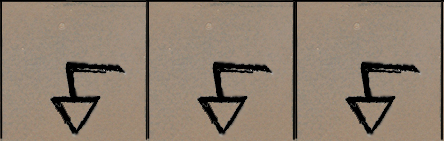
Holding: Try this power: Lawyer - Unexpected RevelationsReasoning: Since an important goal of this power is to teach new players about the game’s strategy, a weighted power is more appropriate than a unique one. Weighted powers encourage players to do something, and we want this power to encourage players to try out crazy bends in the line.


A weighted power “make[s] the player better at a game action everyone can take. The player might pay a lower cost for the action, or get a bigger payoff, or be able to take it when other players cannot.” Lines of Questioning is a relatively simple game, so there isn’t as much design space for weighted powers as there might otherwise be. For example, there are no costs to playing tiles other than the opportunity cost of choosing this one over that one, and that cost isn’t amenable to being lowered.


There is, however, room to improve the payoff when a player bends the line at a connection point. Giving an additional payoff is also a very direct way of giving a power boost, so this seems like a valid avenue to explore.


Lots of new payoffs are conceivable, but this power is specifically aimed toward new players. That means the payoff should (a) be obviously impactful, as new players might not appreciate subtle game effects, and (b) not be difficult to use.


My feeling is that the reward here achieves those things. It’s a blatant, desirable payoff that’s virtually impossible to use incorrectly. Although it needs more testing, I also think it’s appropriately strong, a sufficient power boost to make the game winnable without being so much as to make the game easy.


In fairness, this does edge into the realm of unique powers. However, my first impression is that it will comply with the rule that unique powers not be frustrating. The only wrong way for a new player to use this power would be to pick a space that already has a winning stack in it. Any other choice is at least fine, and might be great. Since bad choices will be both hard to find and clear when they exist, they shouldn’t be made very often.

We are somewhat violating the rule that unique powers should be used only when the goal is to create a new decision; that wasn’t one of the objectives here. Unfortunately, the limited design space for weighted powers makes it difficult to give a reward without doing something new. I feel that the benefits probably outweigh this downside.


Last but not least: one of the rules for Lines of Questioning, instituted back when it wasn’t even called Lines of Questioning, is that the gameplay needs to be thematic. Casting the player power as a strategy pursued in the courtroom makes the power less of an artificial construct, keeping the theme of the game intact.


Testing will likely reveal that this power needs to be tweaked, or perhaps even changed wholesale. As an early attempt, however, I’m happy with it. On Wednesday I’ll let you know how it’s shaking out in play.

Theory: Rules for Player Powers

After hammering away at Lines of Questioning for a while, I feel that the latest variant is a great foundation for a “basic game.” However, it’s also incredibly difficult; saying that playtest victories have been elusive is somewhat like saying that one doesn’t often see a unicorn.

My thinking at the moment is that the core gameplay mechanics are solid, and that the difficulty issue can be addressed with role or power cards that give the player a little boost. Legal analysis teaches that a free-ranging quest for good ideas is less effective than following reliable guidelines, so I thought that as a first step I should try to create those guidelines. Here’s what I’ve come up with.

Player powers in cooperative games (which can include solo games for our purposes here) come in two types: weighting and unique. Both serve to make the game easier, and hopefully more fun as well. However, they accomplish these goals in very different ways.

Weighting powers make the player better at a game action everyone can take. The player might pay a lower cost for the action, or get a bigger payoff, or be able to take it when other players cannot. However it happens, the power weights the player’s choice; it puts something heavy on one side of the scale that balances the options.

Perhaps the quintessential weighting power is the Medic role in Pandemic. The Medic can do all the things the other players can do, but is the best in the game at treating sick people. Since treating sick people is absolutely necessary to win, and the Medic does it better than everyone else, the Medic player’s evaluation of how he should spend his turn is always going to be tilted in that direction.

Unique powers, by contrast, enable the player to do something outside the normal game rules. Instead of making a choice more appealing, as in the case of a weighting power, it adds a whole new option. Players without the power cannot replicate it, even inefficiently. Recent implementations of the idea include Forbidden Desert’s Climber, who cannot be buried under the game’s shifting sands, and Space Hulk: Death Angel’s squad-specific action cards.

Admittedly, the distinction between these categories is not always a bright line. Having a unique power does tend to weight one’s choices; the Climber can move to the same squares as every other Forbidden Desert character, but her additional safety can have a substantial effect on the choice of destination. Similarly, weighting powers can be considered “unique” insofar as they enable players to break the game’s normal rules.

I nevertheless feel that it’s useful to think in terms of powers as coming in two flavors, because they work out somewhat differently in play. Weighting and unique powers produce different behaviors in players and can be used for different purposes.

Weighting powers have subtle, but important, impacts. First, they provide guidance to the player. By making one choice more appealing, weighting powers signal to the player that that is a good choice and he should go in that direction as often as possible.

Think back to Pandemic. If you take a group of people who have never played the game and give them each a role, the players will naturally gravitate toward whatever their roles tell them they’re good at. The Medic will start treating the sick; the Researcher will try to get cards to the Scientist; the Operations Expert will build research stations. All of those are useful contributions, and so that inexperienced group will make progress in the game.

Compare that to what would happen if Pandemic had no role cards. Should everyone treat the sick? Maybe the best strategy is for everyone to build research stations all at once, and completely ignore the cards? Who knows! New players would be completely at sea, and might suffer through many frustrating games while they figured out a reasonable distribution of labor.

That thought experiment points toward another benefit of weighting powers: they are an easy source of player satisfaction. It feels good to treat sick people as a Medic, because each treatment is a little chance to be top dog. No one else can treat people like the Medic can.

As the game goes on those opportunities can even build into something especially satisfying, a reputation for competence and accomplishment. When the table comes to rely on the Medic, trusting him to keep them in the game while everyone else does their behind-the-scenes work, it gives a taste of what it’s like to achieve a position of responsibility in the real world.

By contrast, unique powers offer neither of those things. They do not generally help players decide what to do; if anything, they make in-game decisions more complex. In Space Hulk: Death Angel the purple squad has the ability to move the evil aliens around. It’s difficult to say whether and when that’s better than just attacking them; the choice is highly context-driven, and nothing about the ability itself signals which way the player should go.

Nor are unique powers always going to be wells of player satisfaction. Frequently they just create agita as players struggle to decide whether they should use a power now, or save it for later, or use the power in a different way. We have all seen people frustrated at the end of a game because they were so afraid of wasting their Cool Thing that they never actually did it.

Unique powers are nevertheless still valuable despite those weaknesses because they are an effective route to new decisions and different play experiences. As an example, take another look at Forbidden Desert. Most of Forbidden Desert’s players operate in an environment characterized by water scarcity. The Water Carrier, on the other hand, can have as much as she pleases if she’s willing to spend the time to dig a well; for her the game is all about opportunity costs. Having a unique power fundamentally changes the experience for that one player, which helps keep the game fresh and interesting.

These, then, are the rules I’ll be using as I design player powers for Lines of Questioning:

First, follow the rules here for when player powers are useful, and in what amounts.

Use a weighted power when (a) the power should help players, especially new players, decide how to approach the game; and/or (b) the power is meant to add satisfaction to the game experience.

Use a unique power when (a) the goal is to create a new set of decisions; and (b) the power will not frustrate players by being difficult to use correctly.

On Monday I’ll be back with first-draft ideas.

Theory: Decisions in Physical Games

Miniature golf is fun, even though there’s only ever one right move: to hit the ball in a way that results in a hole-in-one. The same is true of tennis (players should hit unreturnable serves that land perfectly in the corners), baseball (it’s always best to swing the bat along an arc that will produce a home run), and many other games that turn primarily on physical accomplishments rather than strategic calculations. All of these games work, despite their tactical simplicity, because they still have compelling decisions; they simply fold those decisions into the physical performance involved.

Let’s look at one of the first games many people play: catch. The only “move” in catch is to throw the ball back and forth, with the goal of making a good throw directly to the other player. There are no decisions to make, no opposing players to outwit or special moves that score more points. Catch has absolutely no strategic depth.

Yet, people of all ages play catch. It could be that they do it out of obligation, as practice for other games, or as something to occupy their hands while they discuss other things. I’m sure that in some cases one of those is exactly what’s happening. However, given the number of games of catch I see played between people who aren’t members of competitive sports teams and who seem focused on what they’re doing, I think there’s a better explanation: catch, despite being strategically simple, involves a lot of interesting decisions.

Consider what goes into that “good throw.” The amount of force on the ball must be correctly judged; too little and the ball doesn’t get to the other player, too much and she has to go chase after it (or, perhaps, the thrower has to chase after it!). One must tune one’s arm motion to produce that amount of force in the correct direction. Last but not least, one has to find just the right point at which to release the ball—too early or too late will spoil all the other work.

Each of those decisions involves selecting, without complete information, the best option from many alternatives. They are interrelated and must be made in a time-pressured environment. A variety of factors play into them, and one must weigh those factors appropriately. Those decisions are, in other words, interesting, for the very same reasons that decisions in board games are interesting.

Another example of interesting physical decisions comes out of first-person action video games. David Sirlin once described the primary skill in these games as “aiming:” moving one’s mouse, joystick, or directional pad so that the targeting reticule is over the enemy. That doesn’t sound all that enthralling, but millions of people play these games every day. Why?

Part of the answer, no doubt, is AAA graphics and sound. Part, though, is the simple fact that aiming is hard. Like making a good throw in catch, it’s a physical act with many decisions bundled up in it. How exactly should the mouse move, given that the player is also running diagonally forward and jumping and the opponent looks like he’s going to rocket-jump but hasn’t done it yet? It’s not trivial to work that out in less than a second while everything is in motion!

I get the same feeling of satisfaction from a really good throw in catch as I do from a really good move in a board game. That’s not surprising, because in both cases I’ve made a series of tricky decisions correctly. In the end, physical games are games, and they draw their fun from the same well of interesting decisions as their more sedate counterparts do.

Theory: Funnel Design

A funnel design is a game in which the players’ varied activities feed into a single, central resolution mechanism. Funnel designs have two distinct components: the things the players do, and the resolution mechanism that aggregates their choices to determine the impact they have on the game. That can be an extremely valuable and even necessary function, but just as a bad cooking funnel can squeeze off the ingredients needed for a recipe, a bad game design funnel can choke the fun out of a game. It’s important, therefore, to make sure that funnels in games are well-implemented, with due thought given to issues of balance and with care taken to avoid unduly limiting the design.

The odds are you’ve played a funnel design. Most wargamers will be familiar with combat resolution tables, which boil relative strengths down to dice results: at 3-1 odds a 4-6 on a single die means the defending units are eliminated, while at 2-1 odds only a 5-6 eliminates the defenders, etc. Players maneuver their units, decide which supply centers to call on for logistical support, weigh the odds of the weather improving in a few days, and make many other decisions all to get an advantage on the game’s combat resolution table. Then the table produces its result, and play continues.

If you’re not a fan of wargames, you might have played Sentinels of the Multiverse, a card-driven game about superheroes that uses funnel design. Each player stands in the shoes of a particular hero, playing a deck full of unique cards representing that hero’s powers. However, most of these cards feed into a basic mechanism in which the players inflict damage on an arch-villain by making, and then modifying, attacks. Thus, a player might play a card that causes her character to punch the villain, and then modify that attack with other cards that inspire the character to greater effort and encase the character’s fist in a ball of fire; the game’s underlying math recognizes the punch as a 3 damage attack, modified by +1 for the extra effort and +1 for the fire, for a total of 5 damage. The same math engine does the same translation into numbers for gunfire, artificially induced hailstorms, and every other form of superpowered aggression.

By way of comparison, consider a game that doesn’t use funnel design—say, the popular deck-building game Dominion. The goal in Dominion is to acquire victory cards, and one normally does that by getting treasure with which to buy them. However, treasure is not an intermediary system evaluating the players’ performance; it’s a game element that players can directly manipulate. They can buy it, find it, steal it, trade it in for better treasures, and in some cases ignore it entirely. Playing well does not directly and always mean more treasure. While treasure is important, then, players’ actions are not funneled through it while playing Dominion the way they are in the examples above.

Similarly, having a score at the end does not make a game a funnel design. It’s true that a score serves as an overall measure of player performance. However, a score does not operate on a player’s choices, mediating between the player and the game, in the way that a combat resolution table or Sentinels’ underlying math does. Scoring systems can impact the designs of their games, but they don’t pose the same issues as a funnel operating during the game. To put it another way, funnels are used while cooking, while final scoring is akin to the bowl in which the meal is served. Both are important, but they’re not the same and shouldn’t be conflated.

True funnel designs are interesting because they have two very different, yet nevertheless interrelated, parts: the players’ actions, and the funnel mechanism that interprets those actions. Often the two parts do not look, or work, anything like each other; a wargame’s tactical map-based play is replaced with die-rolling when the combat resolution table comes to the fore. Neither, however, can be understood in a vacuum. The players’ actions are all taken in light of the funnel, and the funnel is unimportant without their actions.

Having two vitally interconnected parts to a game can have substantial advantages. First, it creates what Magic: the Gathering’s developers sometimes refer to as “knobs:” values that can be changed to achieve game balance. If one of the choices available to players is too strong or too weak, the designer can either manipulate the choice directly, or alter how the funnel treats the choice. That alternative means of accessing the game’s inner workings can be very useful.

Second, a funnel can summarize very different and complex interactions, allowing a variety of pieces to interact in a consistent way. Actually simulating a battle between tanks and infantry involves measuring their very different strengths: the tanks are sturdier, but the infantry can more easily take advantage of terrain. The tanks are stable firing platforms, but the infantry might be better at getting advantageous angles. Well-designed funnels translate those disparate capabilities into a single system, making it easier for players to evaluate what’s happening and speeding resolution of dense, multifaceted situations.

These advantages do not mean, however, that funnels are invariably desirable or good. Since players must interact with them constantly, their flaws are magnified. A boring funnel can color the entire experience; an unbalanced funnel unbalances everything; an overly complex funnel slows every single turn and renders the import of player choices opaque. Errors in a funnel’s design have multiplicative effects, which makes funnels something to be implemented only when necessary and only with caution.

Moreover, even correctly designed funnels can have unintended and undesirable effects on a game’s design. Some things will be easier to fit into the funnel than others. Inevitably, this encourages the design to move in the direction of including more of what the funnel readily handles, and less of what it does not.

A quick thought experiment demonstrates the impact of a bad funnel. Suppose someone designed a wargame whose combat resolution table said, for every entry, “the defenders destroy all attacking units.” That game would be unplayable; since taking any sort of initiative would be punished by swift destruction, no one would ever want to do anything!

That is, of course, an extreme example. A subtler question might focus on the impact of the die roll that is normally involved in getting a combat resolution table’s final result. Some players strongly disfavor random elements in games, feeling that they privilege luck over skill. Others feel that they simply have “bad dice luck.” (In my experience, this is a majority of people.) Is the die roll important enough to risk losing the former group as potential customers, and to risk frustrating the latter group during play?

There is no single, constant answer to that question, which reminds us that there can be no single, constant answer to the question of whether funnel design is a good idea. It is always a balancing test, a matter of deciding whether the funnel’s advantages outweigh its dangers. Just remember that, like many tools, funnels can be harmful if employed carelessly.

Theory: Making Barriers into Benefits

When someone purchases FFG’s X-Wing, this is what comes in the box.

Image from Boardgamegeek

When someone purchases a box of Warmachine, he or she gets this:

12-31-14 - Warmachine BoxLooking at those pictures, one would expect Warmachine to be the province of the hardest of the hardcore, true grognards–but it is instead, as of last time I saw sales figures, the second most popular miniatures game on the market. Part of that is simply because Warmachine is a superbly designed game. Part, however, is that Warmachine turns its barrier to entry into a strength, using it to generate engagement with the game.

Every game has barriers to entry. Usually they must be purchased, sometimes at great expense. Rules must be read. The game must be set up on the table, which is easy enough in the case of something like Tsuro but which can be quite laborious in the case of wargames and RPGs.

In general, these barriers to entry are undesirable. They prevent people from buying, playing, and enjoying a game. Minimizing them is thus usually viewed as strictly beneficial. Designers try to make rules easier to learn and publishers look for simpler, less expensive components, all in the name of lowering these barriers.

X-Wing is a superb and successful example of that process in action. The minatures are ready-to-play right out of the box, fully assembled and painted to a standard much higher than most players could achieve on their own. While the game is not exactly cheap, lots of starships are available at the $10 impulse-buy price point online. FFG has done as much as possible to make getting into the game painless.

Warmachine, on the other hand, makes few concessions. Its miniatures come unpainted and in pieces. Most boxes of Warmachine minis don’t even have an instruction manual; one is expected to figure out that this piece goes here and that these arms are bent just so such as to fit those torsos. It’s not uncommon for miniatures to have flaws straight out of the box requiring non-trivial modeling skill to fix; from the beginning of the game to today, people have been fixing the “Khador gap.”

One might expect that all of this would render Warmachine the nichest of niche games. Instead, however, it’s enormously successful, begging the question of how an expensive game that requires tremendous amounts of setup could ever overcome its barriers to entry. Warmachine is a superb game, yes–but many superb games fail for lack of players willing to invest in them. That alone did not propel the game to the heights it has now achieved. How did Warmachine manage its barriers to become a key player in the miniatures space?

The answer is that Warmachine’s greatest barrier–the tabula rasa nature of its pieces–is a strength in the eyes of a substantial proportion of the player base. They become an artistic outlet; one is not just going to field pikemen, one is going to field one’s very own pikemen, with paint schemes and poses chosen in accordance with one’s taste. Many players end up involved the game just for the painting, playing only rarely as a way to show off their work.

Personalizing the miniatures in that way invites other forms of creativity, such as biographies and backstories chronicling the achievements of one’s troopers. Ultimately all of this can even feed back to the tabletop, with players devising campaigns in which rivalries between their armies are settled and new ones created. Again, these opportunities to craft something unique are the result of what would otherwise be a barrier to entry, and are an important draw for many players.

Not every game can do what Warmachine does, but it’s a possibility for more games than one might think. What if Agricola required players to build little parts of houses, instead of just using tiles? Would that lead to a greater sense of ownership over the homes, and more incentive to play? Would players be less likely to shake their heads at the depth of chess and give the game up if they painted the black squares on the board themselves?

Barriers to entry are always going to be a problem. However, it’s possible to approach them imaginatively, and ask how they can be used to encourage player investment.

Now you’ll have to excuse me–I have some pikemen to paint.

Theory: Mapped Endgames

Many games come to a point where one player is in control, and will win if she can avoid missteps. While such mapped endgames are to some extent scripted, they can still be fun. The keys are to use those last moments as a reward for previous displays of skill, and to keep them short.

“Mapped endgame” is a term that I feel captures the common situation in which a player sees what he needs to do to win, and is completely in control of whether or not he is ultimately successful. The other players cannot stop him; he will only lose if he makes a mistake that lets them back into the game. The situation is “mapped” because the player knows what course to take to reach victory.

It’s important to recognize that in a mapped endgame, the player is still making decisions and those decisions still matter. Falling dominoes are not a mapped endgame. The person setting up the dominoes has relinquished control at that point; much like the final cinematics at the end of a video game, the gameplay (to the extent that setting up dominoes is a game, a definitional issue which needn’t detain us here) is already over. Mapped endgames occur while the game is in progress, and require the player to keep things on course.

While this may smack of autopilot, mapped endgames can be interesting and even exciting. Even if one is clearly going to win a car-racing game, the rush of speed can still be thrilling. A close-fought strategy game can reach a mapped endgame yet still be tense; the player in the dominant position has to make every move precisely correctly while the opponent(s) choose positions from which they can best take advantage of the slightest weakness.

Of course, a mapped endgame done wrong is a painful grind. The winning player acts by rote while the other players suffer through irrelevant decisions. Concessions become likely as everyone starts to agree that the game is “really” over even if there’s technically more to do.

Fortunately, it’s easy to distinguish good mapped endgames from bad ones. The good ones–the ones that will be fun and interesting as players go through the final moves–follow two design rules.

1. A fun mapped endgame is a reward for skilled play. Tichu was the first game where I saw mapped endgames consistently enough to recognize them as a distinct element in a game’s design. Despite happening often, though, Tichu’s mapped endgames aren’t boring. Rather, they’re hard-earned payoffs.

For those who have never played, Tichu is a card game with some similarities to Hearts. Players go around and around the table playing higher-value cards and sets of cards, with the highest winning all the cards played. While certain cards are worth points, the big gains come from predicting at the start of the hand that one will be able to play all of one’s cards first–and then successfully doing it.

Of course, it’s not easy to make those called shots. Doing so requires a strong hand, but even more than that it demands constant attention and the ability to think several moves ahead. Making several strong plays early can leave one’s hand too weak to finish out; failing to track the cards being played can leave one uncertain about whether someone still has the ace that will beat one’s king. Going out first with other players dedicating their entire hands to preventing it is demanding to say the least.

Fortunately, the effort involved is well-rewarded. Putting the available information together to figure out what’s in the opponents’ hands, and then determining the exact right order in which to play one’s cards, creates a feeling like one has had a little taste of enlightenment. The endgame is completely mapped out, but the player drew the map herself, and every step along its indicated path is a vindication of the player’s effort.

Tichu’s mapped endgames, then, are a part of its fun. The player worked hard to reach the top of the mountain, and now gets to stand on the summit. Even if one is just going through the motions, the ease of the final moves marks out as special the difficult work that went before.

2. Mapped endgames should be brief in real-world time. Power Grid is a great game with one flaw: it can involve a mapped endgame that is completely joyless. The problem is not that the endgame is reached too early, or that it can be reached without skill. Rather, the issue is that it just plain takes forever.

In Power Grid every player controls an electric company, with the goal of having the largest network of cities. There are random elements in the game, but for the most part the results of one’s actions are completely predictable. Expanding to city A will cost $B and earn $C; expanding to X will cost $Y and make $Z.

Early on and for most of the game, there’s enough going on to make putting a fine point on those calculations largely unnecessary. Expanding to A might earn $2 more than expanding to X, but another player is heading toward X and it might be worth shutting him out. Then there’s the possibility of expanding to J, which would open the way to an area where no one else is operating. If nuclear energy becomes cost-effective all three of those might easily be within reach, and the question will be whether expanding to cities R, S, and T is worthwhile. Play keeps moving because the players are thinking about these big-picture concerns, and don’t need to spend time optimizing each move.

Unfortunately, that dynamic falls apart on the very last turn. If the last player to move is in a position to win, then that player will have no uncertainties to weigh or long-term plans to take into account. All she will have to do is find the single best move currently available.

That might sound simple, but a great many things factor into that decision: cash on hand, the number of cities one’s company can power, the state of the market, other players’ possible moves, etc. As a result, this last turn can take an enormous amount of time. I played a game of Power Grid in which the last player took half an hour for the last decisions in the last turn–and, given the number of things to consider, was justified in doing so.

Power Grid’s mapped endgame is one turn long, perhaps only one phase of one turn. It is, nevertheless, boring, because it plays out so slowly. Other players just sit and wait while the last player tries every possible combination of actions to make sure she has found the best one.

What’s worse, the time the other players are spending is just time waiting to see if they get clobbered. There’s nothing they can do to change which move is best, or to stop the last player from finding it. They just have to wait to see if she does. And wait. And wait.

It’s worth comparing Power Grid’s mapped endgames to Tichu’s. Once a player knows what to do to win the hand, the process can play out in seconds. Everyone realizes that that player is in control, makes the plays they have to make, and the hand is swiftly over. Play then resumes with a new hand that puts everyone back in the game.

I still play Power Grid, and I enjoy it every time. I’ve met people who won’t and don’t, however, and it’s often because they don’t want to sit through that last turn. Given how frequently I run into people with that viewpoint, I’ve come to feel that it’s important to avoid replicating the misstep in Power Grid’s design, and to make sure mapped endgames play out quickly.

Mapped endgames can be like Tichu’s, a fun interlude. They can also be like Power Grid’s, an unfortunate and off-putting artifact of a game’s design. To keep your game on the right side of that line, stick to the two key rules: make players earn mapped endgames, and keep them short.