Theory: Why Players Concede–and Why Their Opponents Hate It

Why people do people concede–or why, on the flip side, they object to others doing it? Answering those questions will provide us with guideposts for addressing concessions as a design problem. If we know what leads players to concede, we can try to avoid those situations; if we know what makes concessions objectionable, we can design the game to make them less so.

The definition from last time will guide the discussion here. We aren’t going to talk about concessions that are explicitly a form of cheating, because those raise different issues and need to be addressed separately. We will, however, call on forms of concession that feel bad or are unsporting. Minimizing bad feeling among players, after all, is an important design objective.

So, what leads people quit?

The rest of the game doesn’t matter: A player decides that the result is inevitable and that there’s no point in continuing to play. I’m pretty sure that this is the most common reason for conceding, and the least likely to be found objectionable (but some people still hate it; see below). It’s seen in games ranging from chess to Magic to Little League baseball games decided under a mercy rule.

It’s important to recognize that there can be reason to continue even if a player is sure to lose. In card games played over multiple hands, for example, it can be useful to stay in just to get as many points (or as much money) out of a losing hand as possible, so as to stay in the overall running. One also sees this frequently in car racing; even if a driver is sure to finish behind the leader, it’s worth finishing the race to accumulate points toward the overall championship. When a player concedes because the game is no longer meaningful, it’s a statement that there’s no substantial incentive even to play the game out.

The game has stopped being fun: Fun is always tricky to quantify, but there’s no denying when it’s not there–and its lack makes players walk away from games. Often a lack of fun is tied to the rest of the game not mattering; if it doesn’t matter what one does then the game’s decisions probably aren’t very interesting anymore. However, a game can stop being fun for other reasons as well. Perhaps the decisions were interesting once, but the game has gone on too long and the player wants to be done. Maybe there’s a situation the rules don’t handle well, and it’s led to an argument that sucked the joy out of the experience. The opponent might simply be a jerk who’s not worth tolerating any more.

Conceding leads to long-term advantage: Some tournaments are designed in such a way that losing a match has the ironic effect of increasing one’s odds of winning the whole event. The 2012 Olympic badminton debacle grew out of this; the gold medal favorites, among others, threw their first-round games so that they would face weaker teams later in the tournament. While those players were caught (it was hardly difficult) and ejected, sometimes players can manipulate the tournament.

A variation on this theme is the concession that protects what someone already has. One sees this in Magic all the time, as players at the bottom edge of the cutoff for prizes agree to draw their match rather than risk a loss that would push them lower in the standings. Television game shows feature this brand of concession as well, with players deciding to stop with what they have rather than risk it all on one more question.

Stated by themselves, all of those sound like fair reasons to walk away from a game. A bit underhanded, in some cases, but logical. Why, then, do people dislike concessions?

Taking away the climactic move: Some players don’t just want to figure out how to win, they want to actually do it. Concessions deny these players the final moment in which they knock over the opponent’s king or otherwise demonstrate their victory. This is especially galling when the victory was very hard-won and involved a brilliant final sequence of plays; cutting such a game short can feel anti-climactic.

Reducing the time spent playing: I see this reason cited frequently by players who don’t get to play their preferred game often, or who have traveled a long way to play in an event. These players want to savor every moment of their games. Conceding necessarily denies them some of those moments. It doesn’t matter that a concession means they win; these players value time spent playing more than the victory.

Others are affected: Conceding can impact others in the tournament, as it did in the Warmachine event that inspired these articles. When Adam concedes to Beth, it can affect Charlie’s strength of schedule (he played Adam earlier, and will place higher the better Adam does), or Dani’s odds of winning (she has a good matchup against Adam, but a poor one against Beth). It can even, in unusual cases, have more direct effects. The Warmachine tournament’s result was controversial in part because the player who conceded was ineligible for the grand prize; had he played his game out and ended up in the finals, his opponent would automatically have gotten the big-ticket stuff instead of, as actually happened, going home with second place.

The list of people who can be impacted extends beyond the players. Consider professional sports: paying fans would be livid if a hockey team decided that the game wasn’t worth bothering with and left the ice at the end of the first period. Among the complaints leveled against the ejected Olympic badminton players was that they had wasted ticket-holders’ money. Shoeless Joe Jackson had to wonder what the kid who asked him to “say it ain’t so, Joe” learned about sportsmanship from his decision to tank World Series games.

It’s unsportsmanlike: For some players, trying one’s hardest is integral to honest gameplay. Choosing not to pursue victory with all one’s strength is just inherently wrong under this view, regardless of why one might do it. By joining a game, they feel, one commits to try to win it until the very end. The circumstances have no bearing on this moral obligation.

(As a side note: listing these, I feel, helps make clear why discussions about concessions so often involve people talking past each other. The reasons to concede are all about the game’s obligation to the player: when the game stops making play worthwhile, they posit, the player does not need to continue. By contrast, the arguments against conceding are about the player’s obligations to others: they want the player to keep going, even given that the activity is voluntary and no longer rewarding, because doing so benefits those others. Since the two sides value entirely different things, it’s hard for them even to engage with the opponent’s arguments.)

Looking these over, I think that they represent a fairly comprehensive statement of why concessions happen, and why some players would prefer that they didn’t. Next time we’ll try to put this knowledge into practice, discussing how games can be designed to minimize the impact of a player conceding.

Theory: Defining Concessions (and Rules for a New Print-and-Play)

(First things first: I’ve been working on Trust Me’s follow-up. The print-and-play file isn’t ready yet; the pieces are still very much in flux. However, you can find the rules here–Lines of Questioning – Rules – 10-3-14–as a preview.)

The recent blowup about conceding Warmachine tournament games highlighted the issue concessions pose to game designers: some people approve of them, other people think they’re monstrous, and it’s hard to please both groups at once. Nevertheless, concessions are a fact of gaming life and games need to deal with them as effectively as possible. It’s a designer’s responsibility to catch bugs, and a player dropping out is a situation that needs to be handled just like an incorrect key press or a rules corner-case.

Managing concessions is an area where I feel that a lot of games fall down, so I’d like to spend a few posts hashing out the issues involved. We’ll start with the fundamentals: what counts as conceding? From there we’ll move on to why opinions of the practice are so divided. Then, with groundwork laid, we’ll get into how to handle concessions as a design matter.

I hope you’ll join in and leave your thoughts in the comments. All of these are big topics, and there’s room for differing views. If you think I’ve missed something, or that my analysis is off, let me know.

To talk about concessions, we first have to agree on what we’re discussing–and what we’re not. “Conceding,” as I’m using it here, is a decision to take game actions that the player expects and intends will result in a loss. The archetypal form is the player who pushes the “concede” button in Hearthstone, or who says to a real-world opponent “I’m going to lose, so let’s call this early and do something else.”

However, my definition also includes intentionally playing badly so as to lose the game. In other words, it includes throwing games. I feel that to be useful from a design perspective, a definition of conceding has to encompass that kind of intentional loss. While formal concessions and informal tanking may feel different, they raise the same design issues: winners who feel cheated out of competition and threats to tournament integrity.

Concessions can occur negatively through inaction as well, and this definition allows for that. The player who stops submitting orders in a game of Diplomacy, knowing that this will result in an automatic surrender, creates all of the problems that someone who explicitly announces an intent to leave the game does. (Indeed, this player might have even more of an impact, since other players may continue for a time under the mistaken impression that the conceding player is still involved.) Again, this might feel different from other forms of concession, but its effects are the same.

This definition excludes losses where there was no decision–and thus, no intent–to lose. Playing badly does not raise the same issues as conceding, so long as the player’s goal is to win. Concessions can raise questions about whether a tournament was fair and honest; having a lousy day does not call the event as a whole into question.

Also excluded are situations where a player forces an inconclusive result. The legitimate version of this is playing for a draw in a tournament, expecting that the draw will enable the player to advance where a loss would not. Illegitimate versions include things like DDOSing the League of Legends servers or pulling one’s internet connection while playing Street Fighter, both of which tactics have been used to shut a match down before a loss has been recorded. When done legitimately, an effort to draw gives rise to a proper game that doesn’t undermine the tournament or take anything away from a winner who overcomes the strategy. Done illegitimately, forcing a draw is simply cheating. Either way, the issues posed are entirely different.

My feeling is that this definition captures the situations that are logically related and separates out those that aren’t. Next time we’ll get into why conceding (as defined) is so controversial . . . and why the controversy probably won’t end.

Theory: How to Tell If a Concept Is “Valid”

When I first became seriously interested in game design a little less than a decade ago, I often struggled with the question of whether a concept was a “valid game.” I wasn’t trying to figure out whether the concept was good–I knew that most ideas wouldn’t pan out–but whether it had the potential for fun play. Now, all these years later, trying to figure out why the prototype in the previous post wasn’t as much fun as I had expected gave me the way to analyze that question. To decide whether your concept can produce a valid game, you need to determine what kind of decision the player will make and why that decision will be interesting.

By what kind of decision I mean more than just “the player will try to shoot the bad guys.” Will the player test her dexterity by aiming with a mouse? Maneuver his limited resources on a map? Select a number of chips to bet against a roll of the dice? Strip the game’s theme away, and ask what the player will physically do during the game.

When deciding why that decision will be interesting, think through how that decision (again, the physical thing the player does, not the conceptual activity represented thereby) will work in practice. Is the player going to have multiple possibilities to choose from? What will prevent the player from detecting and picking the right answer every time? After the decision’s consequences have played out, will the player feel like the choice mattered? How long will it take for those consequences to emerge? Is that fast enough for the player to recognize the consequences as feedback, or will they just seem random?

My last prototype failed because I didn’t finish the second question. It looked like there were going to be lots of options, but in practice there was only ever one or two–and only one of them was ever reasonable. Had I really thought the problem through, I would have recognized that I was going down a dead end.

What kind of decision will the player make? Why will that decision be interesting? If you can answer both of those satisfactorily, you have something at least worth considering.

Theory: How to Make Losing Fun

Part of the reason why we have so many sayings to the effect that “winning isn’t everything” is that winning is closely tied to having fun. Yet, it’s possible to make a game fun for players who are currently losing–even for those who have no hope of victory. Providing measurable goals losing players can meet separate and apart from overall victory enables them to walk away from the game with a sense of satisfaction.

The recent poster child for game design that’s fun even when the player is failing is Dark Souls. For those who haven’t played it, Dark Souls is an action game. A very, very hard action game. “Prepare to Die,” its ad copy declares, and die the player will. Many times.

Yet, Dark Souls can be a very satisfying experience even as it clobbers its player. Progress in Dark Souls is easy to measure; monsters are always waiting in the same places, and so one can always tell when one has gotten a little further. Last time the ghoul waiting in the hallway beat me; this time I beat it. Those tiny but clear bits of advancement let players put the controller down with a sense of accomplishment, even if the end of the game is still very far and many deaths away.

Dark Souls’ puzzle-like form–enemies are always in the same place, paths always lead in the same directions–allows for concrete sub-goals. However, there are other ways to introduce objectives that are satisfying even though they are short of winning. Role-playing games, for example, use story for this purpose. Winning might be tens or even hundreds of hours away, but the next chunk of plot and character development is much closer. If the player is enjoying the game and its story, reaching that intermediate point is a powerful incentive and satisfying when it happens.

Games that call heavily on player skill also have this dynamic going for them, although they approach it from a different perspective: they encourage the player to create her own goals. Fighting games, for example, involve a tremendous number of skills. Being good at fighting games is incredibly difficult, so much so that most players will never achieve it (myself included; I top out at a journeyman level). In other words, the vast majority of fighting game players will never “win.”

Fighting games are, nevertheless, deeply compelling, because even if a player will never reach the highest plateau she is constantly achieving things. The first time a player successfully does the forward-down-down + forward motion for a dragon punch feels great. Being able to do it consistently is even better. Comboing into the dragon punch from a standing close hard punch is better still. Pulling off Evil Ryu’s one-frame link to wipe out half of the opponent’s health in a single flurry of attacks is amazing! There’s a never-ending series of little goals fighting-game players can set for themselves, and they maintain players’ interest in climbing the next rung of the ladder even if the player knows its top will always be beyond reach.

These examples offer three different mechanisms by which players can have satisfying, engaging goals short of winning: a puzzle structure that allows one to see progress in concrete terms, a story that is doled out in limited amounts to leave the player wanting more, and a skill-driven model in which players take pride in each small accomplishment. What overall lessons can we derive from the examples?

First, a good sub-goal for keeping losing players engaged is measurable. The player can tell when she has met it. Achieving something isn’t as much fun when the result is in doubt, so there’s no uncertainty about the accomplishment.

Second, these goals are independent of winning. They may involve actions which are conducive to overall victory–hitting a combo contributes to winning a fighting game, and getting part of an RPG’s story is a step toward the game’s conclusion–but they don’t rely on reaching that lofty plateau, or even being ahead at any particular time. It’s possible to get the satisfaction of these achievements even if the game has turned severely against the player.

Third and finally, they’re desirable. None of these are mocking “most improved” awards. They allow one to progress along an interesting axis, even if it’s not the most competitive one.

It’s easy to make winning feel good. Getting losing to feel good is harder–but not impossible. The key is to provide measurable, desirable goals that can be achieved independent of beating the opponent.

Theory: Active vs. Passive Judging

We’re just past the summer, and that means we’re out of tournament season and into arguing-about-tournament-judging season. As an attorney I feel that I have some insight into one of those debates: the question of active vs. passive judging. Passive judging is often derided as an abdication of responsibility, but as with so many things we wish people wouldn’t do, it always happens for a reason. We need to understand why one might choose to employ passive judging before we can evaluate whether it was sensible in any given case to have done so.

Everyone is familiar with “active” judging; it’s what we see in professional sports. The judge (in the form of the referee) watches the game, and when someone breaks the rules he or she takes action. The players are beholden to the judge/referee’s decision as to when he or she will get involved.

“Passive” judging reverses the flow of the interaction. The players decide when to involve the judge, and judges will not take action unless and until a player asks them to. Even if a judge sees a flagrant rules violation, in passive judging scenarios he or she will do nothing absent a player’s request to step in.

Games that employ passive judging take a lot of flak, and it’s not hard to understand why. Tournaments are intended to establish who’s the best at [game], not [variant of the game where the players don’t always follow the rules]. It seems to undermine the meaning of the competition.

Furthermore, passive judging can look odd. A player does something wrong . . . and the person empowered to correct the problem does nothing. It feels as though the judge is at least implicitly condoning the behavior.

Yet, for all its faults, passive judging has one key advantage that a lawyer is well-positioned to recognize: it puts the onus to maintain the integrity of the game on the players, instead of on the judge. That hand-off has a number of benefits.

First, the company or event can use officials who might not be up to the task of active judging, but who can answer specific questions. Smaller outfits that cannot afford a thoroughgoing training program and have to rely on the volunteers they can get might consider this very important.

Second, the judges’ reduced participation means they have a less obvious impact on games and their outcomes. The spectator experience is much improved thereby; everybody hates it when a referee’s call rather than a player’s play is clearly the deciding factor in a game.

Third, the company or event and its judge program gain some insulation from bad decisions. It might seem odd to say that the oft-criticized passive judging can help protect a company’s reputation, but that’s exactly what it does. In an active judging situation, judges–and, by extension, the organization that selected them–bear some responsibility for mistakes and malfeasance. The judges, after all, were supposed to be aggressive about maintaining a proper game state. When something goes wrong during active judging, it means the judge made a mistake, and perhaps the organization did as well when it chose that person to be a judge in the first place.

By contrast, passive judging puts the weight of incorrect play on the players. Now the players are the ones who erred in not catching a problem. Whether the responsibility for monitoring the game was rightly or wrongly assigned to them, they had it, and they failed to carry it out.

It may well be that even when those advantages are placed on the scale, the benefits of active judging still outweigh them. My goal here, however, is not to say that passive judging is superior to active judging. Rather, it is simply to point out that there are reasons other than sheer laziness for implementing a passive judging system. Before criticizing a company or event for using passive judging, we have to think about why it does so, and evaluate the success or failure of the system with that in mind.

Theory: Prototypes Wagging the Dog

It’s important to wary of the impact choice of prototyping material can have on game design. Having a familiar method for building prototypes can channel one’s thinking, limiting the design options available.

Lots of people build games in Game Maker. It’s a powerful tool that allows one to create computer games without needing a thorough background in programming. Any computer-literate person can use Game Maker to construct a prototype.

Or at least, certain kinds of prototypes. Game Maker is built on the assumption that you want to create the kinds of games commonly seen on computers–platformers and shooters, for example. Its easy, drag-and-drop options have those games in mind.

By contrast, it’s quite difficult to use Game Maker to prototype, say, a classic hexgrid wargame. None of Game Maker’s built-in menu functions apply intuitively to creating such a grid or to moving units around it. Game Maker has a “gravity” button, but it doesn’t have a “divide up the playing area into equal spaces” button.

Experienced users can, of course, use Game Maker to produce hexgrid games. I suspect, however, that those who think in Game Maker terms will naturally gravitate toward prototypes–and, ultimately, finished products–that Game Maker readily supports. It’s easy to build action games with Game Maker, and hard to build turn-based strategy. That feedback will tend to shape the mechanics one uses, and ultimately the games one creates.

One can set aside Game Maker for tried-and-true paper, but that has its own problems. Tracking multiple objects through three-dimensional space is relatively easy for a computer, but is a lot of work when done by hand. Games with many modifiers affecting a single random decision benefit from a computer to do the math. The decision to prototype a game with foamboard and 3″ x 5″ cards is also an implicit decision to accept limitations on mathematical and physical complexity that computers can brush right past.

There’s no prototyping tool that doesn’t impose some kind of restriction. Java programmers and C++ programmers may have different opinions about whether it’s realistic to design a game that must run at a consistent 60 frames per second. Someone who builds prototypes out of wood is apt to make a very different game about constructing a house than someone who exclusively uses paper. No matter what one chooses to prototype with, that choice will impose demands on the later design.

Yet, the limitations of one’s prototyping tools need not extend to one’s design thinking. The key is not to let the tail wag the dog. Allowing the game’s needs drive how the prototype is made ensures that the prototype is making the game better, rather than turning the game into an excuse for the prototype.

I’ve been thinking about this because of a new game I’ve been working on recently, something with a more “arty” bent than Over the Next Dune. The game calls for player 2 to have an effect on player 1’s movement. At the start of the process I briefly considered using a simple physics model, with player 2 as a sort of deity who could manipulate gravity in real time. However, that seemed like it would be most obviously suited to a PC or tablet game–and since I have only a very modest background in programming, I wasn’t prepared to go down that road. I started looking for designs that could be mocked up with paper instead.

Although I’m pleased with where the game has gone since, it was, in retrospect, an error to abandon that early concept just because it would have been difficult to prototype. The preconception that “I don’t do prototypes on computer” caused me to shy away from an interesting idea without giving serious consideration to whether I could make it work in a board game format. I limited my own options without finding out whether that limit was really necessary.

They say that when you have a hammer, everything looks like a nail. In the same way, preconceived notions about how to build prototypes can limit one’s design creativity. Focus first on the design, and then find a way to prototype it when the time comes.

Theory: Defining Games in Light of the Simplest One

What’s the most minimal game you can build?

It doesn’t have to be a good game. It doesn’t need to stand up to many plays, staying interesting over time. It just needs to count as a game, with as few lines of rules as possible.

I raise the question because I think it’s an interesting way to get at the issue of what “games” are. Consciously trying to make a game as simple as possible forces one to decide what has to be included–and what can go.

My first thought was Sirlin’s rock-paper-scissors with unequal payoffs: play RPS normally, but rock is worth 10 points. The first person to 10 points wins. (Sirlin made it even more complicated, but let’s skip ahead to this simplified revision.)

So, how many rules?

1. Both players make a sign simultaneously.
2. The three signs are rock, paper, and scissors.
3. The sign for rock is a fist.
4. The sign for paper is a flat hand with fingers together.
5. The sign for scissors is the index and middle fingers extended.
6. Determine the winner as follows:
a. Rock beats scissors.
b. Scissors beats paper.
c. Paper beats rock.
d. If both players made the same sign, no one wins. Return to step 1.
7. Players score as follows:
a. If a player won with scissors or paper, he or she gets one point.
b. If a player won with rock, he or she gets 10 points.
8. If a player has 10 or more points, he or she wins.
9. If no player has 10 or more points, play again, adding the next round’s score to the current total.

(That’s more than I would have thought for RPS!)

So, nine rules with some sub-rules. That’s enough to give us everything one intuitively expects out of a game: decisions, scores, a way to win.

Of course, Sirlin’s variant has special scoring rules. Normal rock-paper-scissors doesn’t need them:

1. Both players make a sign simultaneously.
2. The three signs are rock, paper, and scissors.
3. The sign for rock is a fist.
4. The sign for paper is a flat hand with fingers together.
5. The sign for scissors is the index and middle fingers extended.
6. Determine the winner as follows:
a. Rock beats scissors.
b. Scissors beats paper.
c. Paper beats rock.
d. If both players made the same sign, no one wins. Return to step 1.
7. The player who won gets a point.
8. If a player has 10 points, he or she wins.
9. If no player has 10 points, play again, adding the next round’s score to the current total.

Yet, there are some extras here. The decision between rock, paper, and scissors isn’t much–especially when they all have the same value–but if we could get it down to two choices that would be even better. There could be, for example, only two signs: high and low. That cuts a lot of rules out:

1. Both players make a sign simultaneously.
2. The two signs are high and low.
3. The sign for high is a finger pointing upward.
4. The sign for low is a finger pointing downward.
5. Determine the winner as follows . . .

. . . uh, oh. There needs to be a way to decide who wins. Since the goal is to keep it simple, the rule could just be that high always beats low.

5. Determine the winner as follows:
a. High beats low.
d. If both players made the same sign, no one wins. Return to step 1.

Going down to two options saved us a rule and two sub-rules, while still obliging players to make a decision. Doing away with different scores for different moves also helps:

6. If a player won, he or she gets one point.
7. If a player has 10 points, he or she wins.
8. If no player has 10 points, play again, adding the next round’s score to the current total.

Those changes get us down to eight rules, with only two sub-rules. There’s still a decision to make, a score to keep, and means by which one wins.

Is this, however, still a game? Certainly there’s little of interest here. Strategy stops at “always show high.” No one would find this fun for more than a turn or two. Are the existence of various strategies and the possibility of having fun required? How many strategies? How much fun?

Although no one would (intentionally) put forward a game as simple as High vs. Low as something others should play, I think it’s interesting as a definitional problem. High vs. Low is an edge case for the definition of “game.” It challenges definitions that include it to explain why something so joyless counts as an example of an activity usually thought of as being for fun. At the same time, definitions that would exclude High vs. Low have to find a reasonably measurable element of games that it lacks.

Theory: Rubber Bands

Many games have “rubber bands”–mechanisms that help a player who’s fallen behind catch up–designed into them. Done right, they keep matches entertaining throughout their duration. Done wrong, rubber bands make good play meaningless. It’s important, when adding one to your game, to make sure your rubber band is one of the good ones by using it to create new, interesting decisions for both players rather than simply punishing the leader.

Rubber Bands Done Right: Street Fighter 4 Ryu’s Metsu Hadouken

Street Fighter 4’s catch-up mechanism is the “ultra” move, a high-damage attack which a player can only use after taking a beating. Ultras are a classic rubber band: if a player is getting crushed, the ultra can even the score. They’re also, in at least some cases, very good rubber bands; when they become available they bring a suite of new, challenging decisions for both players.

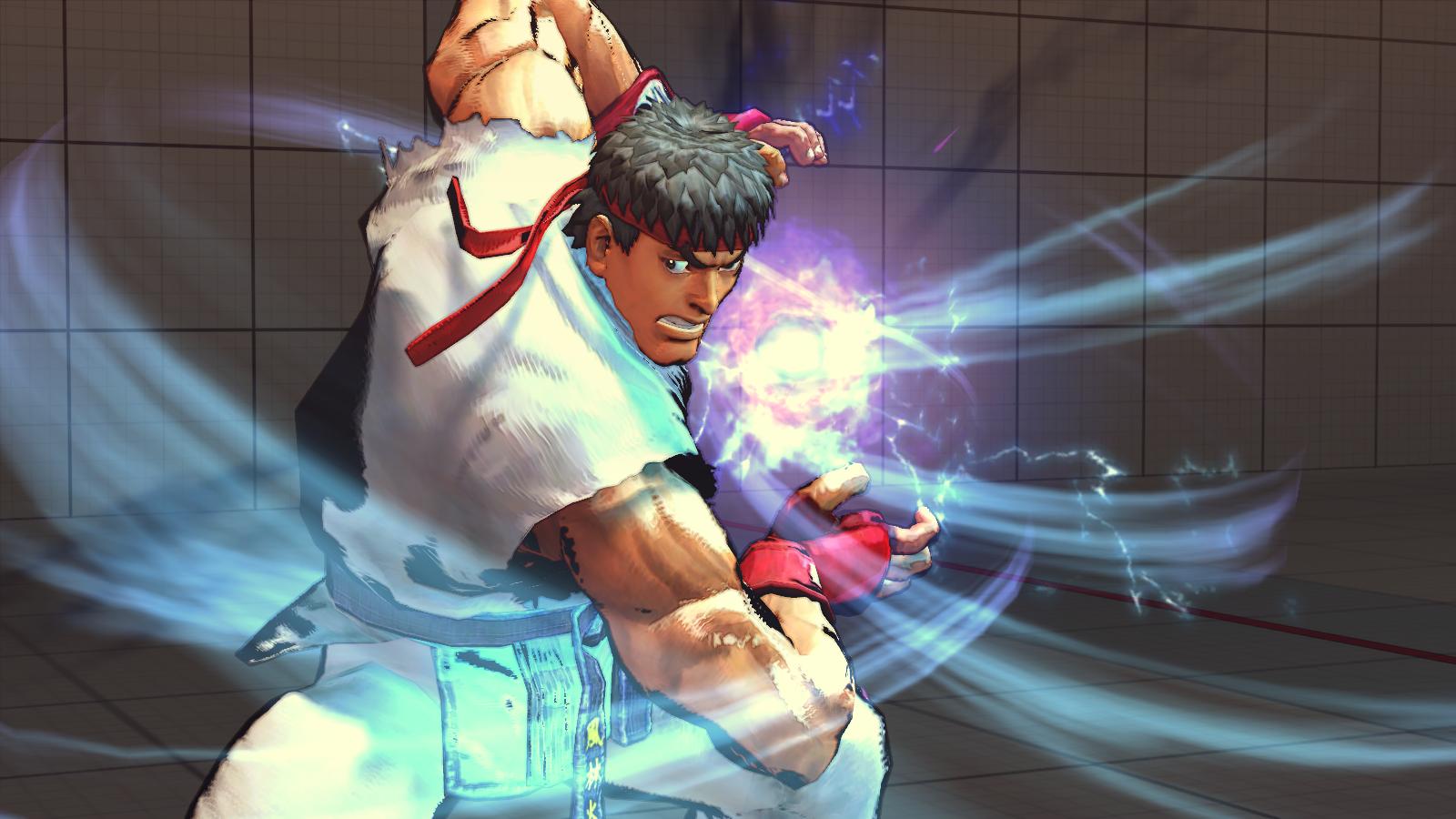
Ryu, one of SF4’s characters, has a really well-designed ultra in his Metsu Hadouken. This ultra is a gigantic fireball that does a great deal of damage if it catches the opponent off-guard. It ticks the most basic comeback mechanism box, in that it allows the player using it to catch up.

Ryu winds up for a Metsu Hadouken in Street Fighter 4

However, the Metsu Hadouken doesn’t do a great deal of work for its player. If he or she just panics and tosses it out there, the opponent can easily block or avoid it. Players need to outwit the opponent and create an opening for this mega-attack, with all the decision-making and strategizing that entails.

The opponent also has decisions to make when the Metsu Hadouken charges up. Experienced players know that there are a limited number of setups that are guaranteed to make the Metsu Hadouken land. Priorities shift as the opponent reevaluates Ryu’s options in light of whether they do or do not lead to the Metsu Hadouden.

Landing or avoiding the attack, however, is just the surface issue.. Would it be better not to use the Metsu Hadouken to catch up, but rather to save it as a way to close out the game after non-ultra-aided comeback? Since the Metsu Hadouken does more damage as one takes more damage, maybe waiting would be best even if there’s a guaranteed setup available right now? Which setups are likely to work against this opponent, in light of his or her behavior and the character he or she is playing? If the opponent knows which setups are most likely to work, what will he or she do in response? The more understanding one has of Street Fighter 4 and its strategy, the more complicated using and defeating the Metsu Hadouken become.

David Sirlin has argued that ultra combos are a problematic element of SF4, and this has led to some internet discussion to the effect that he hates rubber bands in general and ultras specifically. When one goes back to the original source, however, one finds a more nuanced argument: that comeback mechanisms can be good when applied in moderation, that SF4 may need one in light of its overall design, and that there’s a balance between the elegance of designing a game that doesn’t need rubber bands and the advantage of tapping into their appeal. I agree with all of that. My argument is not that catch-up mechanisms are always good, but rather is that if one is going to include a rubber band Ryu’s Metsu Hadouken is a good source of inspiration.

This, then, is a catch-up mechanism done right. It does its job, but only for players who deploy some skill. Both sides have new, difficult decisions to make when the rubber band draws taut. As one improves new layers to the strategy surrounding the mechanism are revealed, no matter which side of the fireball one might be on. The Metsu Hadouken lets players catch up, but it does so in ways that reward skill and good play.

Rubber Bands Done Wrong: Wii Mario Kart’s Blue Shell

There may be no more hated item a player can pick up in all of gaming than the infamous blue shell. Players despise it, and with good reason: the blue shell negates good decisions rather than creating them.

Here’s how it works. Wii Mario Kart is a racing game. The blue shell hunts down whoever is currently in the lead, and stops that player dead in his or her tracks. It’s possible to avoid the blue shell, but it’s exceptionally difficult, so much so that many players don’t think it can be done–indeed, they don’t even try. Getting hit doesn’t ensure that one will fall back in the standings, but anyone who is anywhere nearby will be able to pass. It isn’t uncommon for the leader to drop back to the middle of the pack after a blue shell.

Abandon hope, all ye targeted by the blue shell

Everything the Metsu Hadouken does right, the blue shell does wrong. Are there decisions for the player using it to make? Very few; as a general rule, if one is not currently winning one uses the blue shell as soon as one gets it. Decisions for the leader? Almost none, since the blue shell can only be avoided in specific situations which rarely obtain. Even when they do the decision is completely binary–do you try the trick, or not–and “try” is essentially always the right answer.

There is, of course, a way to be almost completely safe from blue shells: don’t be the leader. In a racing game, however, it seems perverse to incentivize players not to try for first place. Mario Kart doesn’t become more exciting or skill-testing if the players are grinding their way slowly around the track, jockeying for second.

Hence, the effect of the blue shell is to undo the leader’s work while leaving almost no possible response. It punishes racing skill; the better one is, the more

likely one is to be the target of an unavoidable attack that leaves one in 4th place or worse. Blue shells are a rubber band, yes, but in carrying out their function they commit grievous design sins: they discourage good decisions and promote a boring style of play.

If you’re looking at your game and thinking players need a bit of help catching up, a rubber band can be a good way to solve your problem. Just make sure that it makes the game more interesting–for both the followers and the leader. Use it to ratchet up the tension and give players new ways to show their skill.

Game Design vs. Game Theory

First, I just wanted to note the addition of a blog to the links page: Game Design Advance. A number of NYU professors post there, on topics ranging from the expressive meaning (or lack thereof) of game mechanics to lessons game design can bring to the voting process. Most game design discussion revolves around practical considerations; if you’re more interested in the underlying theory of design, I’d encourage you to check it out.

Adding a link on broad game design issues reminds me of an issue that’s come up recently: the difference between game theory and game design. Occasionally when I tell people I’m interested in game design they think I’m an economist, or they tell a joke about my public defense clients being in the Prisoner’s Dilemma. Since the latter, at least, risks sending me off on a tangent about interrogation practices, I think it’s worth clarifying the two terms.

Game theory, as I understand it–and I do not claim to be an expert–is primarily about modeling human behavior. The Prisoner’s Dilemma is a terrible game, but it’s brilliant as a mechanism for explaining why people confess when they would be better off staying quiet. Game theory does sometimes adopt a prescriptive mode, but those efforts rely (again, as I understand it) on building an accurate model.

Game design, on the other hand, is about evoking behavior. It tries to get people to perform certain actions and to experience certain feelings. Those actions might be simple (move a piece on a board) or complex (hit a baseball approaching at 90+ miles per hour), and the feelings might be positive (“this is fun!”) or negative (“this game taught me about a depressing era of history”), but the goal is always to evoke things rather than solely to model real-world behavior.

A designer might, of course, model a historical event as part of the effort to evoke something, and a theorist may want his or her model to make people act or feel in a certain way. The fields overlap. However, they are different enough that I think it’s worth understanding where they diverge. If nothing else, it will protect you from rants about interrogations.

Theory: Taking Mark Rosewater Out of Context

On Monday Mark Rosewater posted his annual “State of Design” article, in which he reviews Magic: the Gathering’s successes and failures for the past year. It’s an interesting read for any Magic player, but as a designer what I think is most fascinating about it are the lessons that could apply to any game. The article has design rules that are still powerful when divorced from their context.

Take, for example, Mr. Rosewater’s conclusion that “[f]lavor is key.” He explains that Magic used the same mechanic (that is to say, a thing cards did) twice: once with a flavorless label, and the second time with a name that evoked ancient Greek mythology. The mechanic was much better received the second time around, in part because players understood what the mechanic represented in the fiction of the game world and got more excited about playing cards with the mechanic as a result. Accessing “chroma” sounded technical and boring, but showing “devotion” and being rewarded for it was fun–even though in both cases players were doing largely the same thing!

Reading Mr. Rosewater’s comments immediately put me in the mind of Over the Next Dune’s rules for keeping searchers on the map. When explained step-by-step, people often find them rather opaque. Say that searchers “bounce like a screen saver,” however, and everyone understands instantly. Picking the right context helps players understand the rules enormously–so much so that I’ve considered switching to a Tron-esque theme just to be able to make the screen savor metaphor more explicit.

Other lessons presented in the article are similar. His self-critique of Magic’s execution of an “enchantment block” is interesting for anyone considering a game with expansions. The discussion on rescuing a failed idea has something to say about every game where the designer’s options are limited. More generally, the fact that Mr. Rosewater criticizes his own work despite the fact that this year saw “the best-selling Magic set of all time” sets a good example.

Mr. Rosewater is a controversial figure; opinions differ on whether he’s saving Magic or smashing it. Whatever one’s opinion of his “New World Order,” however, there can be no denying that he’s learned game design in an environment where sales numbers provide quantitative feedback, with his job staked on his continued success. Hard-won experience like is is always worth considering, and the lessons he has to teach are general enough at the macro level to make figuring out how to apply them to other games time well-spent.