Level-Headed

One of my classes this semester involves using new programming concepts each week. The current assignment involves using file I/O to create simple objects and spaces.

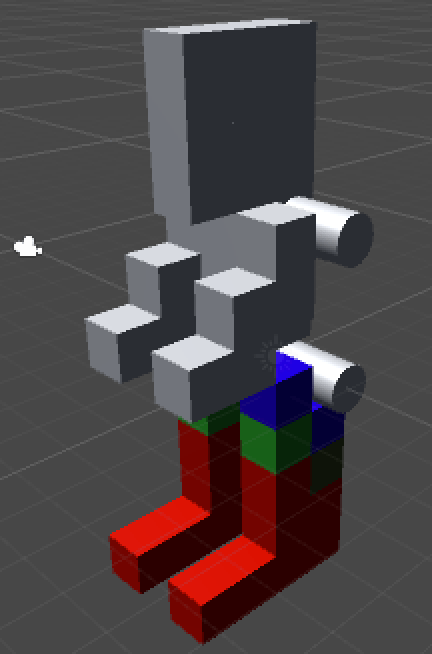
I’m sure it says something about me that I couldn’t help but try building a giant fighting robot.

Screen Shot 2016-03-02 at 11.25.44 PM

Finally

Rumors are spreading about Games Workshop’s new Warhammer 40K introductory product. The nature of the game, what pieces are involved–like all of GW’s releases, those details are getting a lot of attention. Yet, the most noteworthy thing about it might well be the diversity of the people featured on the packaging. Such diversity is long overdue in minis gaming, and I’m glad to see this first small step being taken.

It’s great to see GW taking the lead in emphasizing that minis gaming is a hobby for everyone. Kudos to them.

Theory: Playtest-Centered Events

One of the toughest parts of playtesting is simply finding testers. Not every group sees “let’s play this broken, not-fun-yet game” as a strong pitch. 😉

It can help a lot to take your game to an event expressly meant for testing. Everyone there knows what they’re in for, and is (presumably, hopefully) in the right frame of mind to give useful criticism after playing a game that’s not quite ready for prime time. Rather than having to convince people to give up some of their entertainment time, you’ll be able to work with people who want to be playtesting.

Luckily, it’s generally not hard to find playtest events. I’ve never encountered a local game group that wouldn’t take time out at least occasionally to try a regular’s new design. If you’re in the New York area, the NYU Game Center has Playtest Thursday at 5:00 every Thursday–it’s open to the public. The Unpublished Games Network puts on Unpub events.

Give these, or other similar events, a try. I’ve found Playtest Thursday incredibly useful; I’m sure that it, or like events, will be valuable for you as well.

So You Want to Try Game Design

Welcome! Game design is an endlessly fascinating and exciting field. It’s awesome that you want to try it out, and you can get involved without needing to invest anything more than your time and curiosity.

A lot of people will tell you start by learning something like Unity or GameMaker. Those are both good programs, but there’s a certain amount of lead time involved as you learn them. My suggestion would be to start by creating some games; once you’ve gotten a sense for where you want to go with your first design(s), you’ll be better positioned to judge which tools will help you get there.

Instead of working on the computer, begin by learning with Magic: the Gathering. Try making up some cards, and then play them and see how they work out. (Don’t worry about making them pretty–just cut up slips of paper and sleeve them with normal cards.) Expand that into a full set, or design a cube for drafting. Get used to reaching into a game’s systems.

While you’re doing that, play some games that will give you a sense for just how vast the genre is, and how limitless the opportunities for creativity are. Gone Home, Proteus, Beyond EyesPapers, Please–the list goes on. Challenge yourself to see games in new ways.

Don’t neglect to read, either. There’s a lot of great writing about game design out there. The links page above has some; when you’ve exhausted that, I’d recommend Salen and Zimmerman’s Rules of Play.

Game design is sometimes fun, always challenging, and incredibly rewarding. I hope you enjoy it as much as I do, and that the advice above helps you get started. Again, welcome!
Theory: “The Beast” and His Influence on Fighting Games

Even if you’re not a Street Fighter fan, Umehara “The Beast” Daigo’s career is worthy of study. It’s a fascinating example of how someone can become arguably the most iconic player of a game, and in the process direct and focus the energies of an entire genre’s community.

Not familiar with The Beast? Take a look at this video, now legendary, and read through Dave Sirlin’s summary of what it’s like to play against him. Although he has had fewer high-level tournament victories in recent years, Umehara Daigo remains synonymous with skill taken to almost preternatural levels, and is still considered a kind of living brass ring, the standard against which all others judge themselves.

Yet, what I find most noteworthy about The Beast isn’t his play. It’s the way he has shaped the play of others. He demonstrated the heights to which it was possible to climb, and in so doing he popularized the climb itself. I used to meet casual fighting game players, but for years now those I’ve encountered have been heavily invested in skill-building. I attribute that in large part to the specter of The Beast, and the all-consuming effort that has gone into defeating him.

Umehara Daigo has, perhaps unintentionally, reshaped the image of Street Fighter. It’s not about Ryu versus Ken; it’s about one player versus another. Many people have changed how their games were played; The Beast changed the nature of the game itself, and that makes him a remarkable figure in the history of competitive play generally.

Theory: Build a Community

Games are more fun when there are other people to play them with. Design quality, however, doesn’t guarantee that a game will attract a large enough audience to give players the best possible experience. Thus, it’s worth setting aside time as part of your design process to build your game’s community.

I’m not necessarily talking about a major marketing push. Large expenditures don’t need to be a component of your plan. Just assembling a self-sustaining group of players can be a tremendous forward step for your game; do that a few times, and you’ve got yourself a phenomenon.

Killer Queen, one of my professors pointed out earlier this week, is a great example of this strategy in action. At PRACTICE 2015 Killer Queen’s designers expressed that the game is meant to be played in an arcade environment. To help create that experience, they have divided their time between making technical changes to the game and getting machines into new cities. That effort invested in expanding Killer Queen’s community has paid off; today the game has large tournaments to keep competitive players engaged, and enough access to support casual play as well.

Releasing a game without giving thought to building an audience for it is like sending up a flare; maybe people will be looking in the right direction, and maybe they won’t. If you make sure that even a small audience sees your flare, though, you’ve immediately got some help in getting the word out. Put energy into community-building before, and immediately after, your game releases; it will be well-spent.