We’re Back

Thanks all for your patience while I was away!

Privateer Press formally opened their publicly-accessible playtesting today. I’m eager to see how it works out; running good playtests is demanding, so both the company and the community have their work cut out for them. Here’s hoping for good things; public beta tests could be more valuable than I think they have been for many outfits that have tried them, and I would love to see Privateer Press taking a lead in this area.

In the meantime, I think it’s interesting to see how Privateer Press describes playtesting. Many designers considering public betas have to figure out how to explain what they need to a competitive player community. The linked document is one of what I hope will someday be many examples.

My Apologies

I have to ask everyone’s forgiveness for not updating last week. In my defense, I’ve never had a child before last week. 😉

This next week will also be an off week for the blog. Normal service will resume next Monday. 🙂

Link: How the Hearthstone Designers View Data

It’s a given that large-scale digital games like Hearthstone can collect a lot of data. More interesting, I think, is how the designers interpret what they gather. What kinds of information do they use? How do they interpret the patterns they see?

Those questions make this post by Ben Brode, Hearthstone’s Game Director, worthy of study. He highlights particular statistics, and notes what they mean to the Hearthstone design team. It’s a great window into how professional designers running a major product grapple with both design problems, and the overwhelming amount of raw data that’s meant to help them address game issues.

Theory: Rule-Learning as a Campaign

Earlier today, Eric Zimmerman posted this:

Learning the rules is a journey, with a destination and trials to be faced along the way. It maps very nicely onto a strategy campaign. Why don’t games do this?

I can think of several reasons:

The game’s rules are too simple to warrant it. Love Letter is a fun game that doesn’t need an elaborate teaching process.

The game isn’t much fun until all the rules are in place. Formula D has an introductory version that actually turned off some folks I played with. It was so easy that it removed the decisions that made the game interesting. Only when the more challenging mechanics were added in did they understand the game’s appeal.

Resource considerations. Making a tutorial campaign that’s fun enough to be worth playing is a lot of work. It’s hard to blame designers for allocating their time and budget elsewhere.

How to teach the rules isn’t often thought about as closely as the core design. If the preceding reasons are understandable choices about how to teach a game, this is the unfortunate counterpart: the failure to recognize a possibility. Sometimes a game would benefit a great deal from what was once called “programmed instruction,” but has to soldier on with a shaky rulebook or poor tutorialization. The designer(s), heavily focused on the game, don’t give enough time to working out how it ought to be introduced to others.

I’ll cheerfully say I’ve never made a campaign out of learning rules. However, it’s a neat idea. We know that a game about figuring out the game can be a lot of fun. Expanding that out to a whole narrative experience is a neat idea that’s worth pursuing.
 

Theory: Make Some Decisions Easy

As a rule I’m not a fan of Twitter as a platform for argumentation. It’s often hard to express something compellingly in 140 characters. Sometimes it’s not even feasible to break an idea up into 140 character chunks.

Kevin Wilson (designer of, inter aliaNetrunner) was nevertheless able to make a strong case on Twitter today. Since tweets have a way of being lost–like, sadly, so much game design theory–I thought I’d keep them here for future reference.

Theory: Make Your Game Look Different

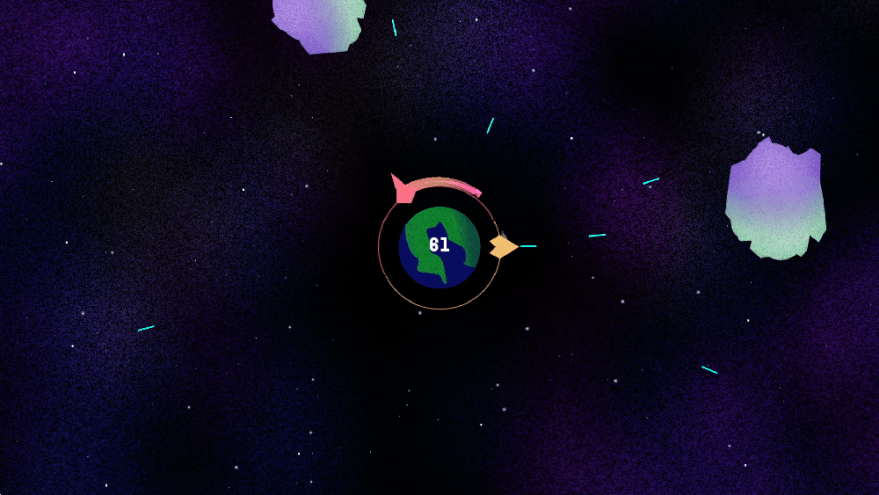
It’s hard to stand out in a crowded marketplace. Having a game that looks great is one solution, but there are a lot of titles with striking 3D art and realistic animation. Trying to get ahead by having even more realistic visuals than one’s competitors is a painfully expensive strategy, even if it works.

Better instead, I would submit, to have distinctive visuals. Using good design and a sense of style, you can set your game apart.

ppf
Planet Protection Force. The design intentionally brings Asteroids to mind, while also making the game’s unique two-characters-in-one mechanic immediately readable.
hitman-go
There is no end of violent video games out there. Hitman Go distinguishes itself with its boardgame-y look.

Duelyst has relatively low-res sprite art; the lower resolution allows for lots of animation.