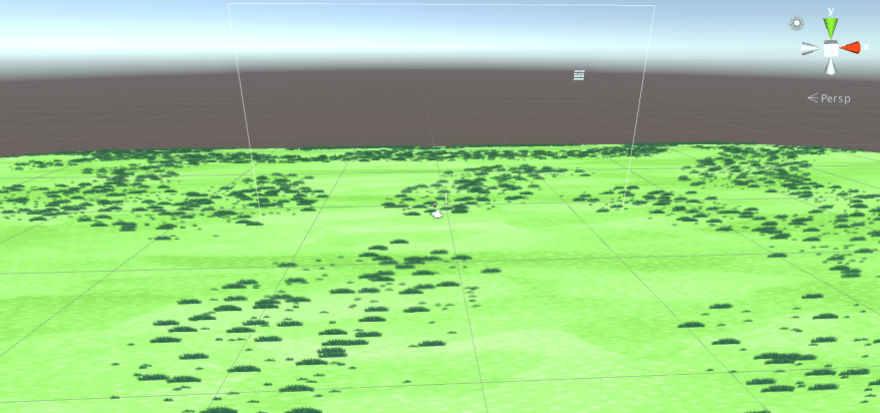
This Week: Some Small Prototypes

I feel like I should have lots to talk about. After all, I’m working all the time. 😉

Unfortunately, all of the work is very much at the “in progress” stage. There’s plenty going on, but it’s foundational. Games will emerge down the line . . . when these projects are much further along.

In the interim, getting to post Pray for Rain was a lot of fun. Over the course of this semester I’ve done a bunch of prototypes of similar or slightly smaller scale, and I’ll post a few of them over the coming week. Some of them taught me some very interesting lessons; hopefully they’ll be of interest to you as well.

So, my apologies for the rather brief posts recently, and brace yourself for some slightly silly, slightly buggy, and generally offbeat micro-games. 😉

A Farewell to GDC

First and foremost, let me apologize for missing Friday’s update. Travel got in the way, but I’ve now learned how to update reliably from the road. The same issues won’t arise next time.

Second, I’d like to encourage anyone planning on attending GDC next year to drop by the Shut Up & Sit Down board game lounge! The players had a great time and the games were spectacular. Networking opportunities abounded for those so inclined, but it was also a low-key environment ideal for anyone who just wanted to take a break. Helping out with the board game area was the highlight of my time at GDC, and I’m confident that it was for many of those who visited it as well.

Hope to see you there in 2017!

Notes from GDC 2016

A few things I’ve learned (or been reminded of) while at the Game Developers Conference:

1. Visual polish matters, all the more so in a crowded environment. It gets harder and harder to stand out when the number of games on display gets larger. Good visuals are a big help in getting people to stop and look at your game.

2. Style matters when it comes to visual design. A distinctive look can beat very finely wrought–but generic–visuals.

3. San Francisco trains don’t run early on weekends, so don’t plan to fly out too early. 😉

Board Games at GDC

Just mentioning again that there’s tabletop gaming at the Game Developer’s Conference! The great folks at Shut Up and Sit Down are running board games on the third floor of the west building every day of the conference from 10 to 6. Drop by if you’re there!

Ink

Among the many things I’ve learned at the Game Center is that there are many, many game engines out there. Unreal and Unity–we’ve all heard of those. Game Maker, probably that one too. Yet, they’re just the tip of the iceberg.

The latest addition is one I’m quite excited about: Inkle Studios’ Ink. At PRACTICE 2015 Meg Jayanth remarked on its power as a tool for building games with branching narratives, especially when the branches are intended to have such complex interrelations as to defy even the writers’ expectations of the story. I haven’t worked on that sort of game in the past, but I’m keen to do so, if only to see Ink in action.

Link: the Nebraska Problem

Having recently begun to work with procedural generation, I have a new appreciation for how powerful the technique is—and how difficult using it to produce something realistic can be. Thus, I was struck by this discussion of procedurally laying out grass in The Witness. It’s a thorough and engaging look at how one can confront this type of problem.

Theory: It’s OK to Ask for Playtesters

The worst thing you can do, as a designer, is hesitate to show someone your work in progress. It’s not fun, it’s not exciting, it doesn’t work right, it’s not even complete–all of that is fine. Everyone understands that creators need feedback, and by and large I’ve found people very willing to be a part of that. There’s nothing wrong with testing a game before it’s “ready,” so don’t be shy about doing so.

Once every so often I run into someone who feels reluctant to playtest until a game is done. Sometimes this is a matter of pride for them, but more often it comes from a worry about wasting the players’ time. Dropping a bad game in their lap feels like doing them an unkindness.

In my experience, though, people like playtesting. They enjoy the feeling of being an insider, of seeing behind the curtain. What was opaque becomes something they can interact with, and that’s exciting.

What’s more, people just plain like being helpful. If you ask for assistance with testing they’re often happy to oblige. There’s no imposition in help freely given.

Of course, there are some limits. It’s good to make reasonable preparations for your playtesters: have necessary components ready to go, and think through how you’re going to explain the rules (or have the rulebook ready for them, if you’re at that point). The game failing isn’t a waste of the playtesters’ time–that’s part of testing–but being unprepared might be.

So, be courteous–but don’t be reluctant. Playtesting is necessary for you, and often engaging for the testers. Rather than denying them the fun of approaching a game in an unusual way, run your idea out there and see how it goes.