Theory: Active vs. Passive Judging

We’re just past the summer, and that means we’re out of tournament season and into arguing-about-tournament-judging season. As an attorney I feel that I have some insight into one of those debates: the question of active vs. passive judging. Passive judging is often derided as an abdication of responsibility, but as with so many things we wish people wouldn’t do, it always happens for a reason. We need to understand why one might choose to employ passive judging before we can evaluate whether it was sensible in any given case to have done so.

Everyone is familiar with “active” judging; it’s what we see in professional sports. The judge (in the form of the referee) watches the game, and when someone breaks the rules he or she takes action. The players are beholden to the judge/referee’s decision as to when he or she will get involved.

“Passive” judging reverses the flow of the interaction. The players decide when to involve the judge, and judges will not take action unless and until a player asks them to. Even if a judge sees a flagrant rules violation, in passive judging scenarios he or she will do nothing absent a player’s request to step in.

Games that employ passive judging take a lot of flak, and it’s not hard to understand why. Tournaments are intended to establish who’s the best at [game], not [variant of the game where the players don’t always follow the rules]. It seems to undermine the meaning of the competition.

Furthermore, passive judging can look odd. A player does something wrong . . . and the person empowered to correct the problem does nothing. It feels as though the judge is at least implicitly condoning the behavior.

Yet, for all its faults, passive judging has one key advantage that a lawyer is well-positioned to recognize: it puts the onus to maintain the integrity of the game on the players, instead of on the judge. That hand-off has a number of benefits.

First, the company or event can use officials who might not be up to the task of active judging, but who can answer specific questions. Smaller outfits that cannot afford a thoroughgoing training program and have to rely on the volunteers they can get might consider this very important.

Second, the judges’ reduced participation means they have a less obvious impact on games and their outcomes. The spectator experience is much improved thereby; everybody hates it when a referee’s call rather than a player’s play is clearly the deciding factor in a game.

Third, the company or event and its judge program gain some insulation from bad decisions. It might seem odd to say that the oft-criticized passive judging can help protect a company’s reputation, but that’s exactly what it does. In an active judging situation, judges–and, by extension, the organization that selected them–bear some responsibility for mistakes and malfeasance. The judges, after all, were supposed to be aggressive about maintaining a proper game state. When something goes wrong during active judging, it means the judge made a mistake, and perhaps the organization did as well when it chose that person to be a judge in the first place.

By contrast, passive judging puts the weight of incorrect play on the players. Now the players are the ones who erred in not catching a problem. Whether the responsibility for monitoring the game was rightly or wrongly assigned to them, they had it, and they failed to carry it out.

It may well be that even when those advantages are placed on the scale, the benefits of active judging still outweigh them. My goal here, however, is not to say that passive judging is superior to active judging. Rather, it is simply to point out that there are reasons other than sheer laziness for implementing a passive judging system. Before criticizing a company or event for using passive judging, we have to think about why it does so, and evaluate the success or failure of the system with that in mind.

Trust Me: Speeding Up Setup

Trust Me’s initial setup poses some challenges. On the one hand, randomness in the setup improves replayability. On the other hand, even when relatively few rerolls are needed it takes over five minutes. Furthermore, the setups that result can be uninteresting. It’s easy for barriers to get stuck between the edge of the board and a marker, such that they can’t move until Player 1 has passed them by and they’re irrelevant. I’ve also had barriers tuck themselves into corners or along the edges, where they’ll never affect the game.

In an effort to speed things up, and to ensure that there are enough barriers in relevant positions, I’m experimenting with starting some of the markers and barriers on the map. There’s no need to reprint the board if you have already; the changes are easily made with a pencil.

There are also two technical changes: the setup rules now prevent markers or barriers from starting the game in the “Start” space . . . and the “Start” space is now marked on the board. Oops!

Trust Me – 9-10-14

Theory: Run Railroads Through Your Sandbox

Although I don’t play role-playing games often, I like to think about them. They’re interesting both from a definitional perspective (is Dungeons & Dragons a “game” if there’s no winner?) and as a source of technical problems to solve. One of those technical problems came up recently online: how to motivate players in a freeform, “sandbox” game. I find that issue particularly fascinating because at its root are definitions–the competing natures of the “sandbox” and the “railroad”–and solving it requires one to break down some of the barriers between them, mixing the two styles of play.

“Sandbox” role-playing games are familiar to video gamers who enjoy the Elder Scrolls series or Minecraft. These games allow players to participate in storylines, or not, as they choose, and provide alternative activities for those who want to explore the game world on their own terms. Star Wars Galaxies, the now-defunct MMO, was a classic example: players could save the galaxy . . . or set themselves up as a shopkeeper . . . or attend in-game dance parties.

“Railroad” role-playing games, by contrast, have a fixed plot that the players are required to follow. They can make tactical decisions about how to negotiate with a queen or defeat a dragon, but the plot only proceeds when the queen gives the players a quest or the dragon is slain. Deposing the queen, allying with the monster, or otherwise deviating from the pre-determined story is not an option.

In recent years, “railroad” has often been treated as synonymous with “bad.” If someone wants to run a railroad game, it’s said, he or she should instead write a book and spare players the experience of going through the characters’ motions. Sandboxes, where the players can do anything they choose, are argued to be a more interesting mode of play for all involved.

The trouble is that setting up the sandbox doesn’t always lead to a great game. People often go to great effort to construct a wonderful, vibrant, fascinating world–and then find that their players don’t interact with it. Rather, the players wait for someone to give them direction, as though they can’t do without the hated rails.

Frustrated world-creators sometimes frame this problem in terms of preferences: they like the sandbox while their players prefer the railroad. However, there’s another way of approaching the issue that makes it far more manageable. The problem, one could say, is that the players are behaving rationally in an unknown environment.

Consider what a sandbox looks like from a player’s perspective. The player is confronted with a very complex system (good sandboxes, after all, have a lot going on). It’s hard to predict the consequences of actions, but given the elaborate weave of the setting there are apt to be unforeseen and even negative ones. How should the player respond?

A player might, completely logically, answer “do nothing.” Since any action could end up badly, and there’s no way to predict which courses will be fruitful and which will get the players in over their heads, it’s sensible for them to wait and see. Rather than empowering the players, the sandbox encourages them to give in to paralysis.

Getting the players moving again is not a matter of changing their gaming preferences, nor is it a matter of locking them into a railroad. Instead, the sandbox needs to change so that players are incentivized to act. The railroad isn’t needed, but the rails are, because they tell players what they’ll be rewarded for doing.

Think about, for example, Red Faction: Guerilla. RF:G tasks players with replaying the American Revolution, with Martian colonists standing in for the Americans and Earth as the exploitative, mercantilist power. Think that building up support among the colonists is most important? Prefer instead to steal industrial equipment? Feel that it’s time to take the fight to the Earth forces? Want to just plain drive fast in low gravity? Players can do any or all of those, and more besides. RF:G is a great sandbox experience, with lots of things for players to do or ignore as they choose.

Yet, although RF:G has freedom, it also has guidance. Players are introduced to the rebellion-against-Earth plotline early, and it’s made clear that in the game world participating in the rebellion will be viewed as a morally good act. They’re also rewarded for participating in the first few missions with new equipment. At that point the player is cut loose to do as he or she will, but missions on behalf of the rebellion are clearly marked on the player’s map, available whenever the player is interested.

By putting players in a sandbox but giving them some initial goals, RF:G avoids the problem of the cautious player. I’ve never heard of anyone who responded to RF:G’s sandbox by doing nothing. Players are incentivized to act by the plot, and have enough information to feel comfortable taking advantage of the additional opportunities available.

Other successful sandbox games follow this freedom-with-guidance model. The Elder Scrolls IV: Oblivion has a plotline about stopping cultists from summoning monsters that incidentally helps players become acclimated to the game world; players can stop the cultists or not, but they at least know what kinds of things are available to do. Infamous puts the player in the shoes of a superhero, and lets him or her know the game world’s citizens will be grateful if he or she saves the city before opening the game up. Even Lego sets come with instructions. Incentives to do something are provided along with the option to do otherwise, and thus the player is given both freedom and some forward momentum.

Making a good sandbox, then, doesn’t involve completely dismantling the railroad. It instead requires designers to provide both open-ended choices and some direction to encourage players to engage with them. Run some rails through the sandbox, even though the players will be permitted to leave them. If they do nothing else, those rails will help players understand what they can do. The fun of the game will take it from there.

Something Completely Different: Trust Me

Trust Me is a game about working together with someone when the two of you don’t have much in common. It’s quick to learn and easy to play. At this point it’s also largely untested; I’m still at the stage where I’m trying to figure out if these mechanics are worth pursuing. If you get a chance to give the game a try, I’d be glad to hear your thoughts.

Assembly for this game is a lot quicker than it is for Over the Next Dune. I printed everything, cut it out, and was ready to go inside of an hour. OtND has, admittedly, a lot of prep; Trust Me is on the other side of the spectrum.

There are a few things I’m particularly interested in feedback on:

1. Is the game easier for one player than for the other?
2. How long did it take you to set the game up–not the printing and cutting, but putting the pieces on the board?
3. How long did the game last overall?
4. How many times did you play? Are you interested in playing again?

Let me know what you think!

Trust Me – 9-5-14

The Case Study: (Small) Update

I wanted to give a quick update on Over the Next Dune. Unfortunately, playtesting opportunities have been sparser than expected–the end of summer is a busy time for everyone, playtesters included! Testing results are, as a result, still forthcoming.

A major force behind my recent turn toward building a PC version of OtND is that I’d like to increase the number of people I can reach out to for testing. It’s one thing to say “please print these pages, cut them out, learn the game, play, and report back.” Skipping to the third step by sending out a .exe makes the request something else entirely.

OtND hasn’t changed much in the last few weeks, but it’s by no means forgotten. As always, if you have the chance to play some test games (especially with the five-turn, 30-card deck variant) let me know. If print-and-play isn’t something you’re interested in, stay tuned for the computerized edition.

The Case Study: PC Prototype in the Works

Following up on last time‘s discussion, I’ve been working on a PC version of Over the Next Dune. My hope is that this will make testing faster (since resetting the game will just be a click instead of a die-rolling process), and will enable more people to try the game out.

Unfortunately, my minimal background in coding means that progress is a bit slow. Please bear with me while I go through the learning process. 🙂

Theory: Prototypes Wagging the Dog

It’s important to wary of the impact choice of prototyping material can have on game design. Having a familiar method for building prototypes can channel one’s thinking, limiting the design options available.

Lots of people build games in Game Maker. It’s a powerful tool that allows one to create computer games without needing a thorough background in programming. Any computer-literate person can use Game Maker to construct a prototype.

Or at least, certain kinds of prototypes. Game Maker is built on the assumption that you want to create the kinds of games commonly seen on computers–platformers and shooters, for example. Its easy, drag-and-drop options have those games in mind.

By contrast, it’s quite difficult to use Game Maker to prototype, say, a classic hexgrid wargame. None of Game Maker’s built-in menu functions apply intuitively to creating such a grid or to moving units around it. Game Maker has a “gravity” button, but it doesn’t have a “divide up the playing area into equal spaces” button.

Experienced users can, of course, use Game Maker to produce hexgrid games. I suspect, however, that those who think in Game Maker terms will naturally gravitate toward prototypes–and, ultimately, finished products–that Game Maker readily supports. It’s easy to build action games with Game Maker, and hard to build turn-based strategy. That feedback will tend to shape the mechanics one uses, and ultimately the games one creates.

One can set aside Game Maker for tried-and-true paper, but that has its own problems. Tracking multiple objects through three-dimensional space is relatively easy for a computer, but is a lot of work when done by hand. Games with many modifiers affecting a single random decision benefit from a computer to do the math. The decision to prototype a game with foamboard and 3″ x 5″ cards is also an implicit decision to accept limitations on mathematical and physical complexity that computers can brush right past.

There’s no prototyping tool that doesn’t impose some kind of restriction. Java programmers and C++ programmers may have different opinions about whether it’s realistic to design a game that must run at a consistent 60 frames per second. Someone who builds prototypes out of wood is apt to make a very different game about constructing a house than someone who exclusively uses paper. No matter what one chooses to prototype with, that choice will impose demands on the later design.

Yet, the limitations of one’s prototyping tools need not extend to one’s design thinking. The key is not to let the tail wag the dog. Allowing the game’s needs drive how the prototype is made ensures that the prototype is making the game better, rather than turning the game into an excuse for the prototype.

I’ve been thinking about this because of a new game I’ve been working on recently, something with a more “arty” bent than Over the Next Dune. The game calls for player 2 to have an effect on player 1’s movement. At the start of the process I briefly considered using a simple physics model, with player 2 as a sort of deity who could manipulate gravity in real time. However, that seemed like it would be most obviously suited to a PC or tablet game–and since I have only a very modest background in programming, I wasn’t prepared to go down that road. I started looking for designs that could be mocked up with paper instead.

Although I’m pleased with where the game has gone since, it was, in retrospect, an error to abandon that early concept just because it would have been difficult to prototype. The preconception that “I don’t do prototypes on computer” caused me to shy away from an interesting idea without giving serious consideration to whether I could make it work in a board game format. I limited my own options without finding out whether that limit was really necessary.

They say that when you have a hammer, everything looks like a nail. In the same way, preconceived notions about how to build prototypes can limit one’s design creativity. Focus first on the design, and then find a way to prototype it when the time comes.

Theory: Defining Games in Light of the Simplest One

What’s the most minimal game you can build?

It doesn’t have to be a good game. It doesn’t need to stand up to many plays, staying interesting over time. It just needs to count as a game, with as few lines of rules as possible.

I raise the question because I think it’s an interesting way to get at the issue of what “games” are. Consciously trying to make a game as simple as possible forces one to decide what has to be included–and what can go.

My first thought was Sirlin’s rock-paper-scissors with unequal payoffs: play RPS normally, but rock is worth 10 points. The first person to 10 points wins. (Sirlin made it even more complicated, but let’s skip ahead to this simplified revision.)

So, how many rules?

1. Both players make a sign simultaneously.
2. The three signs are rock, paper, and scissors.
3. The sign for rock is a fist.
4. The sign for paper is a flat hand with fingers together.
5. The sign for scissors is the index and middle fingers extended.
6. Determine the winner as follows:
a. Rock beats scissors.
b. Scissors beats paper.
c. Paper beats rock.
d. If both players made the same sign, no one wins. Return to step 1.
7. Players score as follows:
a. If a player won with scissors or paper, he or she gets one point.
b. If a player won with rock, he or she gets 10 points.
8. If a player has 10 or more points, he or she wins.
9. If no player has 10 or more points, play again, adding the next round’s score to the current total.

(That’s more than I would have thought for RPS!)

So, nine rules with some sub-rules. That’s enough to give us everything one intuitively expects out of a game: decisions, scores, a way to win.

Of course, Sirlin’s variant has special scoring rules. Normal rock-paper-scissors doesn’t need them:

1. Both players make a sign simultaneously.
2. The three signs are rock, paper, and scissors.
3. The sign for rock is a fist.
4. The sign for paper is a flat hand with fingers together.
5. The sign for scissors is the index and middle fingers extended.
6. Determine the winner as follows:
a. Rock beats scissors.
b. Scissors beats paper.
c. Paper beats rock.
d. If both players made the same sign, no one wins. Return to step 1.
7. The player who won gets a point.
8. If a player has 10 points, he or she wins.
9. If no player has 10 points, play again, adding the next round’s score to the current total.

Yet, there are some extras here. The decision between rock, paper, and scissors isn’t much–especially when they all have the same value–but if we could get it down to two choices that would be even better. There could be, for example, only two signs: high and low. That cuts a lot of rules out:

1. Both players make a sign simultaneously.
2. The two signs are high and low.
3. The sign for high is a finger pointing upward.
4. The sign for low is a finger pointing downward.
5. Determine the winner as follows . . .

. . . uh, oh. There needs to be a way to decide who wins. Since the goal is to keep it simple, the rule could just be that high always beats low.

5. Determine the winner as follows:
a. High beats low.
d. If both players made the same sign, no one wins. Return to step 1.

Going down to two options saved us a rule and two sub-rules, while still obliging players to make a decision. Doing away with different scores for different moves also helps:

6. If a player won, he or she gets one point.
7. If a player has 10 points, he or she wins.
8. If no player has 10 points, play again, adding the next round’s score to the current total.

Those changes get us down to eight rules, with only two sub-rules. There’s still a decision to make, a score to keep, and means by which one wins.

Is this, however, still a game? Certainly there’s little of interest here. Strategy stops at “always show high.” No one would find this fun for more than a turn or two. Are the existence of various strategies and the possibility of having fun required? How many strategies? How much fun?

Although no one would (intentionally) put forward a game as simple as High vs. Low as something others should play, I think it’s interesting as a definitional problem. High vs. Low is an edge case for the definition of “game.” It challenges definitions that include it to explain why something so joyless counts as an example of an activity usually thought of as being for fun. At the same time, definitions that would exclude High vs. Low have to find a reasonably measurable element of games that it lacks.

Theory: Rubber Bands

Many games have “rubber bands”–mechanisms that help a player who’s fallen behind catch up–designed into them. Done right, they keep matches entertaining throughout their duration. Done wrong, rubber bands make good play meaningless. It’s important, when adding one to your game, to make sure your rubber band is one of the good ones by using it to create new, interesting decisions for both players rather than simply punishing the leader.

Rubber Bands Done Right: Street Fighter 4 Ryu’s Metsu Hadouken

Street Fighter 4’s catch-up mechanism is the “ultra” move, a high-damage attack which a player can only use after taking a beating. Ultras are a classic rubber band: if a player is getting crushed, the ultra can even the score. They’re also, in at least some cases, very good rubber bands; when they become available they bring a suite of new, challenging decisions for both players.

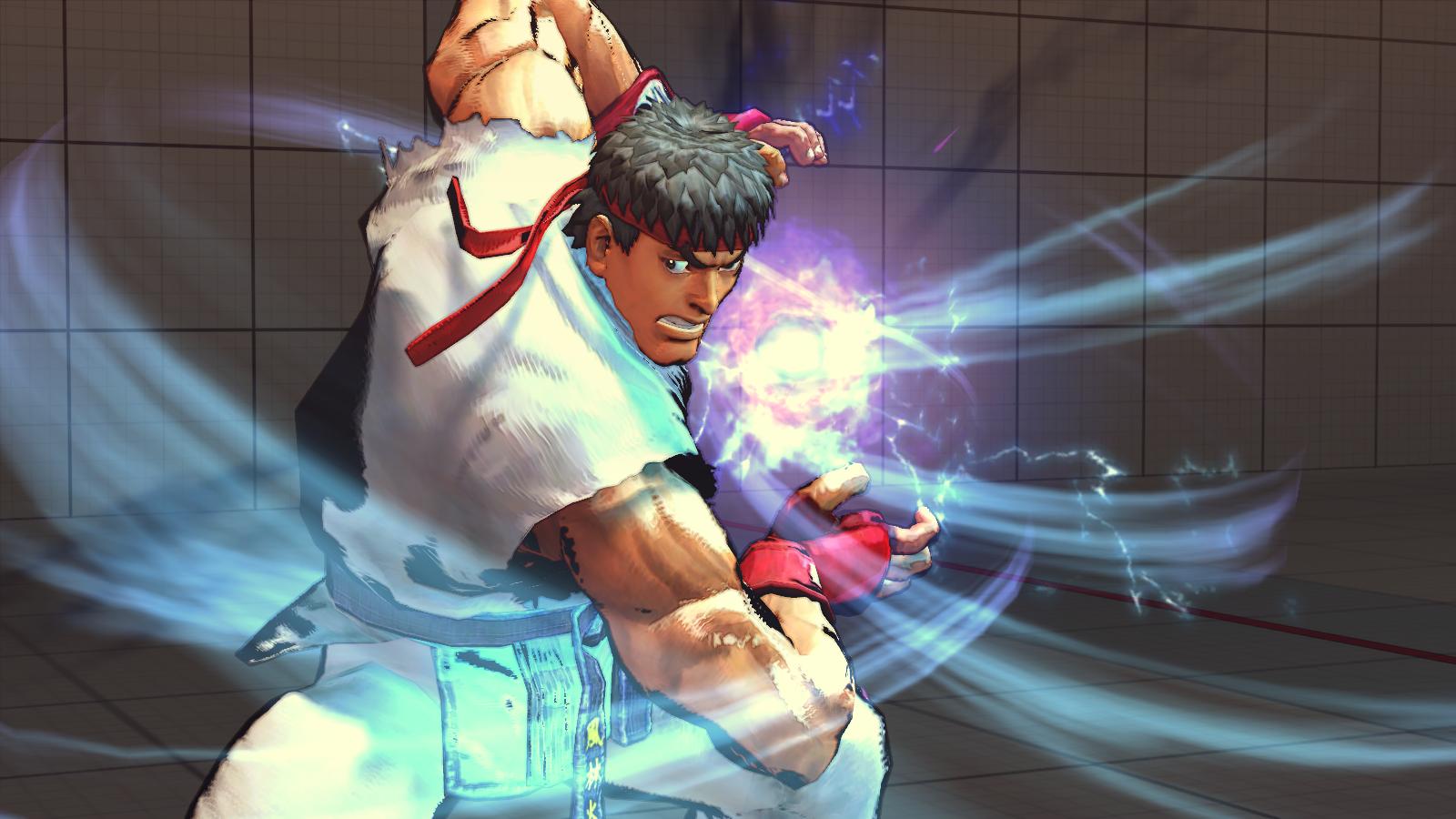
Ryu, one of SF4’s characters, has a really well-designed ultra in his Metsu Hadouken. This ultra is a gigantic fireball that does a great deal of damage if it catches the opponent off-guard. It ticks the most basic comeback mechanism box, in that it allows the player using it to catch up.

Ryu winds up for a Metsu Hadouken in Street Fighter 4

However, the Metsu Hadouken doesn’t do a great deal of work for its player. If he or she just panics and tosses it out there, the opponent can easily block or avoid it. Players need to outwit the opponent and create an opening for this mega-attack, with all the decision-making and strategizing that entails.

The opponent also has decisions to make when the Metsu Hadouken charges up. Experienced players know that there are a limited number of setups that are guaranteed to make the Metsu Hadouken land. Priorities shift as the opponent reevaluates Ryu’s options in light of whether they do or do not lead to the Metsu Hadouden.

Landing or avoiding the attack, however, is just the surface issue.. Would it be better not to use the Metsu Hadouken to catch up, but rather to save it as a way to close out the game after non-ultra-aided comeback? Since the Metsu Hadouken does more damage as one takes more damage, maybe waiting would be best even if there’s a guaranteed setup available right now? Which setups are likely to work against this opponent, in light of his or her behavior and the character he or she is playing? If the opponent knows which setups are most likely to work, what will he or she do in response? The more understanding one has of Street Fighter 4 and its strategy, the more complicated using and defeating the Metsu Hadouken become.

David Sirlin has argued that ultra combos are a problematic element of SF4, and this has led to some internet discussion to the effect that he hates rubber bands in general and ultras specifically. When one goes back to the original source, however, one finds a more nuanced argument: that comeback mechanisms can be good when applied in moderation, that SF4 may need one in light of its overall design, and that there’s a balance between the elegance of designing a game that doesn’t need rubber bands and the advantage of tapping into their appeal. I agree with all of that. My argument is not that catch-up mechanisms are always good, but rather is that if one is going to include a rubber band Ryu’s Metsu Hadouken is a good source of inspiration.

This, then, is a catch-up mechanism done right. It does its job, but only for players who deploy some skill. Both sides have new, difficult decisions to make when the rubber band draws taut. As one improves new layers to the strategy surrounding the mechanism are revealed, no matter which side of the fireball one might be on. The Metsu Hadouken lets players catch up, but it does so in ways that reward skill and good play.

Rubber Bands Done Wrong: Wii Mario Kart’s Blue Shell

There may be no more hated item a player can pick up in all of gaming than the infamous blue shell. Players despise it, and with good reason: the blue shell negates good decisions rather than creating them.

Here’s how it works. Wii Mario Kart is a racing game. The blue shell hunts down whoever is currently in the lead, and stops that player dead in his or her tracks. It’s possible to avoid the blue shell, but it’s exceptionally difficult, so much so that many players don’t think it can be done–indeed, they don’t even try. Getting hit doesn’t ensure that one will fall back in the standings, but anyone who is anywhere nearby will be able to pass. It isn’t uncommon for the leader to drop back to the middle of the pack after a blue shell.

Abandon hope, all ye targeted by the blue shell

Everything the Metsu Hadouken does right, the blue shell does wrong. Are there decisions for the player using it to make? Very few; as a general rule, if one is not currently winning one uses the blue shell as soon as one gets it. Decisions for the leader? Almost none, since the blue shell can only be avoided in specific situations which rarely obtain. Even when they do the decision is completely binary–do you try the trick, or not–and “try” is essentially always the right answer.

There is, of course, a way to be almost completely safe from blue shells: don’t be the leader. In a racing game, however, it seems perverse to incentivize players not to try for first place. Mario Kart doesn’t become more exciting or skill-testing if the players are grinding their way slowly around the track, jockeying for second.

Hence, the effect of the blue shell is to undo the leader’s work while leaving almost no possible response. It punishes racing skill; the better one is, the more

likely one is to be the target of an unavoidable attack that leaves one in 4th place or worse. Blue shells are a rubber band, yes, but in carrying out their function they commit grievous design sins: they discourage good decisions and promote a boring style of play.

If you’re looking at your game and thinking players need a bit of help catching up, a rubber band can be a good way to solve your problem. Just make sure that it makes the game more interesting–for both the followers and the leader. Use it to ratchet up the tension and give players new ways to show their skill.

Game Design vs. Game Theory

First, I just wanted to note the addition of a blog to the links page: Game Design Advance. A number of NYU professors post there, on topics ranging from the expressive meaning (or lack thereof) of game mechanics to lessons game design can bring to the voting process. Most game design discussion revolves around practical considerations; if you’re more interested in the underlying theory of design, I’d encourage you to check it out.

Adding a link on broad game design issues reminds me of an issue that’s come up recently: the difference between game theory and game design. Occasionally when I tell people I’m interested in game design they think I’m an economist, or they tell a joke about my public defense clients being in the Prisoner’s Dilemma. Since the latter, at least, risks sending me off on a tangent about interrogation practices, I think it’s worth clarifying the two terms.

Game theory, as I understand it–and I do not claim to be an expert–is primarily about modeling human behavior. The Prisoner’s Dilemma is a terrible game, but it’s brilliant as a mechanism for explaining why people confess when they would be better off staying quiet. Game theory does sometimes adopt a prescriptive mode, but those efforts rely (again, as I understand it) on building an accurate model.

Game design, on the other hand, is about evoking behavior. It tries to get people to perform certain actions and to experience certain feelings. Those actions might be simple (move a piece on a board) or complex (hit a baseball approaching at 90+ miles per hour), and the feelings might be positive (“this is fun!”) or negative (“this game taught me about a depressing era of history”), but the goal is always to evoke things rather than solely to model real-world behavior.

A designer might, of course, model a historical event as part of the effort to evoke something, and a theorist may want his or her model to make people act or feel in a certain way. The fields overlap. However, they are different enough that I think it’s worth understanding where they diverge. If nothing else, it will protect you from rants about interrogations.