This Week: Some Small Prototypes

I feel like I should have lots to talk about. After all, I’m working all the time. 😉

Unfortunately, all of the work is very much at the “in progress” stage. There’s plenty going on, but it’s foundational. Games will emerge down the line . . . when these projects are much further along.

In the interim, getting to post Pray for Rain was a lot of fun. Over the course of this semester I’ve done a bunch of prototypes of similar or slightly smaller scale, and I’ll post a few of them over the coming week. Some of them taught me some very interesting lessons; hopefully they’ll be of interest to you as well.

So, my apologies for the rather brief posts recently, and brace yourself for some slightly silly, slightly buggy, and generally offbeat micro-games. 😉
Level-Headed

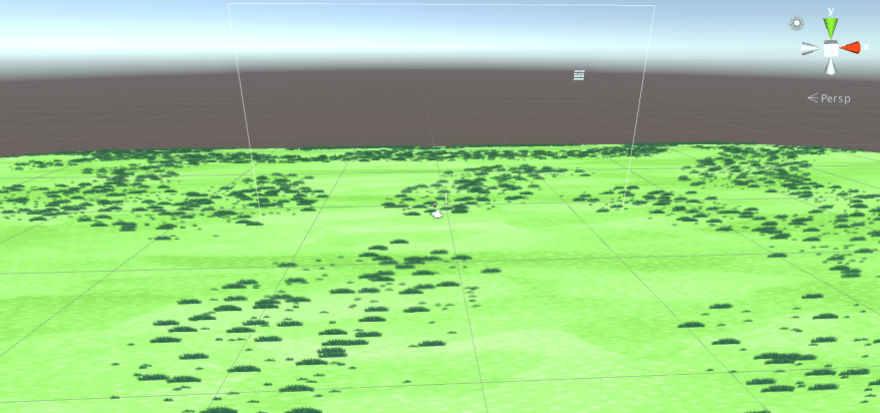
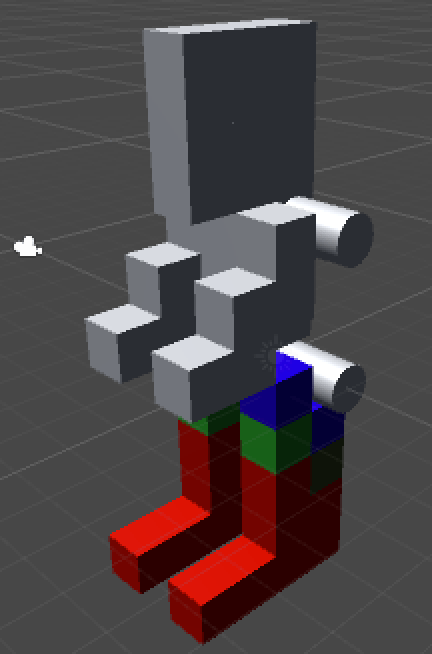
One of my classes this semester involves using new programming concepts each week. The current assignment involves using file I/O to create simple objects and spaces.

I’m sure it says something about me that I couldn’t help but try building a giant fighting robot.

Screen Shot 2016-03-02 at 11.25.44 PM

Global Game Jam 2016: Gift Swap

I was fortunate enough to get to work with several great designers at last weekend’s Global Game Jam, including Eric of the Push Your Luck Podcast (which everyone should listen to!). We developed Gift Swap, a semi-cooperative game that combines a tricky logic puzzle with easy-to-learn gameplay. Gift Swap was ultimately nominated for Best Tabletop Game at the NYU Game Center jam site, and we’re all the prouder of that because our site was tied for best-attended in North America!

The rules and cards are available above. Let me know what you think, and share your games as well!

25th Hour Projects: The Dead Man’s Hand

No one likes a cheat. That’s good; you don’t want them to like you.

It would be easy enough to win this game. An ace in the hand, an ace in the river, and an ace up your sleeve pretty much guarantee that you can take the pot. With four raises behind you and more ahead, it would be quite a haul.

The money, though, isn’t what you’re looking for. No, you need to show them that you can fool them. That you have been fooling them, all along. You need to win and win, so that they know you must be cheating, and then you need to let them see how, so that they see without a shadow of a doubt that you did cheat them, and that they couldn’t catch you until you let them.

Of course, that final reveal has to be perfect in every respect. It must reveal the trick while also proving that you’re in total control of the situation. That they’re only realizing what happened because you wanted them to.

They won’t be happy. It’ll still be worth it.

PSA: X-Wing Storage

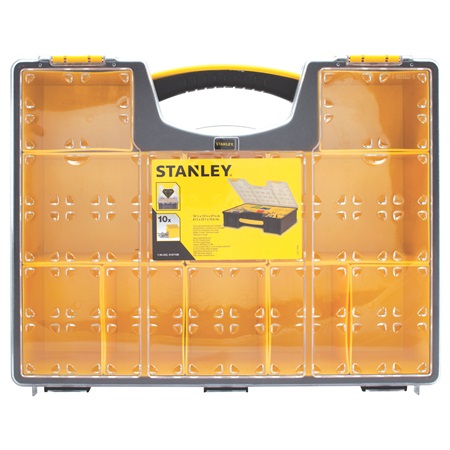
If you’re a player of Fantasy Flight’s X-Wing minis game, and you’re trying to figure out how to store the pieces, look no further than this:

Stanley Organizer

This unprepossessing device is intended for organizing nails and screws, but it’s ideally sized for X-Wing miniatures. Each of the smaller bins is the perfect width, height, and depth for two normal-sized fighters in their plastic packing, along with cards and stands. The larger bins in the middle row hold mid-size vessels with just a little trimming of their packaging.

1-15-15 - X-Wing Storage

At less than $20, and offering protection easily comparable to much more expensive storage/transport solutions, I can’t recommend these organizers highly enough.

In the Lab: Porting Phalanx

I’m very proud of Phalanx, but the specific changes and improvements that people have suggested for the next iteration aren’t easy to do in HTML5. Furthermore, Phalanx’s assets are starting to be a bit much for web publishing; there’s already noticeable lag as the game loads, and every further bit of juice is going to make that worse. Those two factors are driving me to re-implement the game in Unity.

As I do so, I’m taking the opportunity to clean up Phalanx’s code. During the rapid prototyping process that brought the game to life I was focused on “does this work,” and not especially concerned about optimization. While it’s not a taxing game to run even in that non-optimized state, there are some areas–particularly in how pieces determine whether the space they want to move into is open–where there’s room for improvement. This is clearly the right time to take care of them.

Needless to say, the changes in architecture have produced a new round of logic errors. 😉 Such is the way of things, I’m learning.

If you need me, I’ll be in the trenches . . . .

Phalanx: Dear Me

Dear Me,

You got a lot of great feedback today. That means it was a good day for the game!

Now, 48 hours from now something is going to be broken again–probably a lot of things. You’re going to be hip-deep in trying to get your code to work. There’s no reason to deny it; that’s always how this sort of thing plays out.

When immersed in the code like that it can be difficult to remember what the real goals are, as distinct from what the very next step of get-this-to-work requires. Ergo, I’m noting the feedback here, where you’re sure to look. 😉

  • Bodies are distracting; look like they should still be something the player can interact with. Either get rid of them entirely or make them more obviously not like active pieces.
    • Animation for dying that then goes away?
  • Small sparks indicating where formations have hit each other head-on.
  • Board colors are too intense; looks like a camo pattern, or just like digital blur. Do something different; perhaps muted colors with a layer of grass at the bottom?
  • Only highlight the last formation created; highlighting all of them becomes less useful over time.

Good luck!

– You